A great home real video isn't just a slideshow of pictures; it's a powerful marketing tool that turns your static listing photos into a dynamic, emotional experience for potential buyers. It's hands-down the best way to grab someone's attention, tell the story of a home, and drum up serious interest before they even think about scheduling a visit.
Why a Home Real Video Is a Must-Have
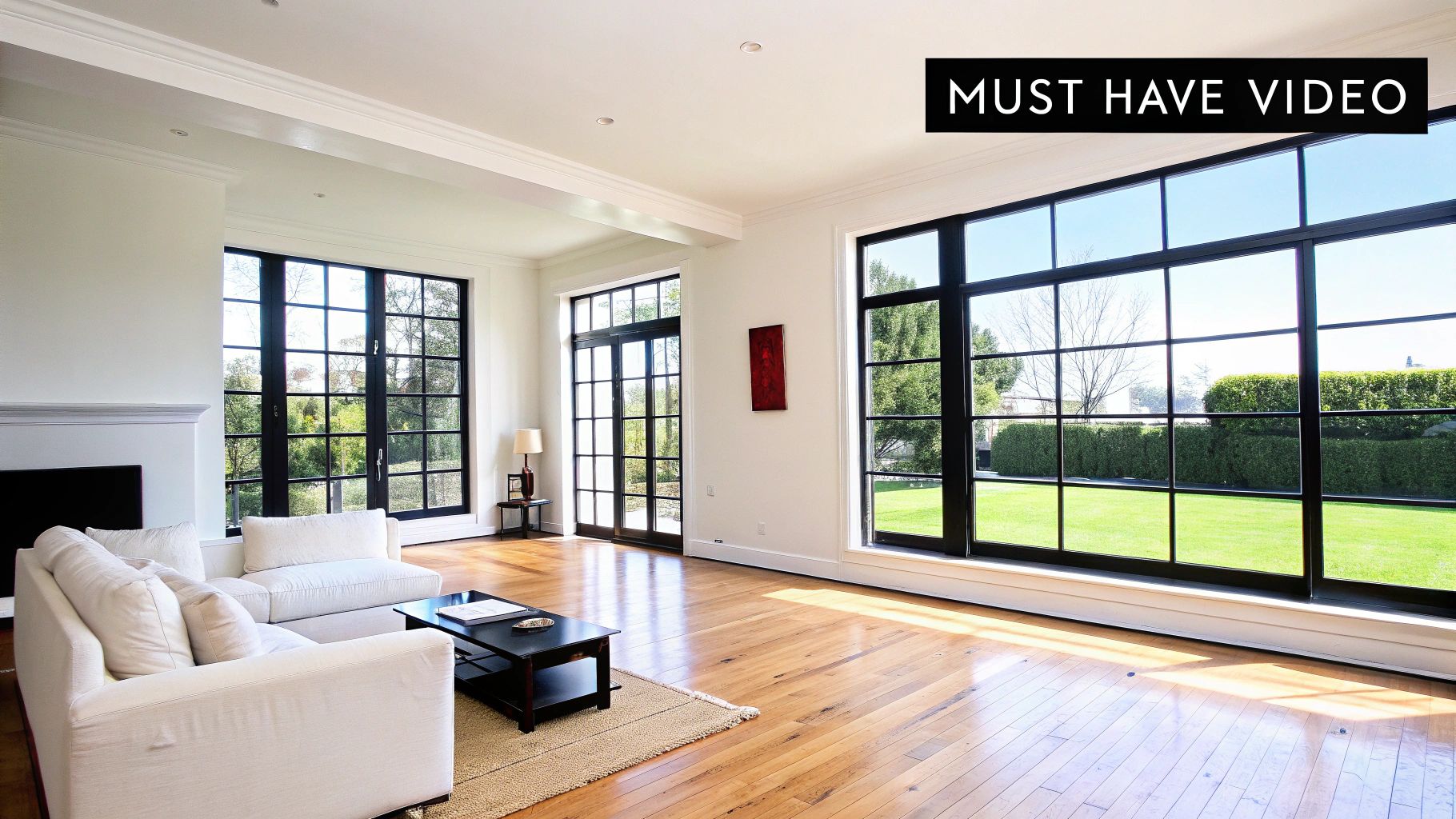
In today's crowded real estate market, just having nice photos isn't enough to make a listing pop. Buyer expectations have changed. They don't just want to see pictures of a property anymore—they want to experience it. This is exactly where a well-made home video comes in.
The Power of Emotional Connection
A video tour does something that photos struggle to do: it builds an emotional bridge. It gives potential buyers a chance to truly imagine their life in the space, from brewing coffee in the kitchen to unwinding in the living room after a long day. That kind of connection is tough to forge with still images alone.
A video helps a buyer fall in love with the idea of a home before they ever book a showing. It’s not just about showcasing features; it’s about selling a lifestyle and a feeling.
By weaving a story, you can guide viewers through the property’s best highlights, creating a flow that feels both natural and memorable. You can learn more about creating this connection in our complete guide: http://agentpulse.ai/blog/video-marketing-for-real-estate-agents.
Standing Out in a Competitive Market
The numbers don't lie. Listings that feature video content consistently leave static photo listings in the dust, generating a staggering 403% more inquiries from potential buyers.
What’s really surprising, though, is that only about 9% of agents are actually creating videos for their listings. This leaves a massive opportunity on the table for anyone willing to step up.
This gap is your competitive edge. By adding video to your marketing mix, you instantly set your listings apart from the rest. It proves to sellers that you're using every tool at your disposal to market their property effectively. There are many excellent video tools for realtors out there to make this easier. This isn't about chasing a trend—it's about using a proven strategy to get better results.
Choosing the Right Photos for Your Video
A great real estate video doesn’t start in the editing software; it starts with the photos you select. Even with a powerful tool like AgentPulse, the end result is only as good as what you put into it. Think of it as giving the AI the best possible ingredients to work with. Your goal is to lay a visual foundation that tells a compelling story about the home.
You'd never use a blurry, poorly lit photo for a glossy print brochure, right? The same logic applies here. In fact, it's even more critical because the subtle motion in the video will draw the eye to every single detail in the frame.
Create a Balanced Visual Mix
To keep viewers engaged, you need a mix of shots that feel like a real tour, not just a slideshow of empty rooms. Relying solely on wide-angle photos of every space can make a video feel flat and repetitive. You want variety.
Instead, think like a cinematographer and aim for a thoughtful blend:
- Wide Shots: These are your workhorses. They establish the scene, showing the full scope of a room, its layout, and how it connects to other areas. Perfect for the main living area, kitchen, and primary suite.
- Medium Shots: Here's where you zoom in a bit. Focus on a key feature that makes a room special—maybe it's a cozy fireplace flanked by built-in shelves or a sleek kitchen island with stylish pendant lights.
- Detail Shots: Don't forget the close-ups! These are what scream "quality." Capture the texture of a custom tile backsplash, the finish on high-end cabinet hardware, or the grain in a hardwood floor. These little touches add a layer of polish and perceived value.
This combination is what creates a true visual narrative. The wide shot sets the stage, the medium shot points out the highlights, and the detail shot proves the quality.
Staging and Sequencing for a Natural Flow
Keep in mind that when a video pans across a room, any clutter becomes way more obvious than it does in a static picture. Before the photographer even shows up, make sure the home is staged perfectly. That means decluttered countertops, tucked-away personal items, and furniture arranged to maximize the sense of space.
Remember, you’re not just showing a house; you're creating a virtual walkthrough. The sequence of your photos should mimic how someone would naturally tour the home.
A logical progression from one space to the next makes the video feel intuitive and immersive. I've found this order works incredibly well for creating that sense of a journey:
- Exterior: Start with your best curb appeal shot to make a strong first impression.
- Entryway: Welcome viewers inside.
- Living Room: Move into the primary gathering space.
- Kitchen & Dining: Show off the heart of the home.
- Bedrooms & Bathrooms: Tour the more private living quarters.
- Backyard/Patio: Finish with a relaxing shot of the outdoor space.
One last technical tip: stick to high-resolution JPG files. They provide the perfect balance of crisp image quality and manageable file size, so you won't get bogged down during the upload process. By being intentional with your photo selection and sequencing, you're building an engaging foundation that will truly captivate potential buyers.
Weaving Your Photos into a Compelling Story
Once you've handpicked your best photos, the real fun begins: turning them into a story. This is where you move beyond a simple slideshow and create an immersive tour that helps a potential buyer envision themselves in the space. With a tool like AgentPulse, this part of the process takes just a few minutes, so you can really focus on the creative touches that make a video stand out.
Start with a Strong Hook
Your video’s story starts before the first image even fades in. A short, powerful intro is your chance to grab attention immediately. Skip the tired, generic phrases like "Welcome to this beautiful home." Instead, lead with the property's single most desirable feature or benefit.
Think about what makes this listing special. Is it the location? The yard? The school district?
For example, try one of these instead of a boring title:
- "Your Private Backyard Oasis Awaits in the City."
- "Modern Living with Unbeatable Downtown Views."
- "The Perfect Family Home in the Oakwood School District."
This simple shift tells viewers why they should keep watching and sets the perfect tone for the visuals to come.
Arrange Your Photos to Guide the Viewer
The order of your photos creates the narrative flow of your video, essentially acting as a virtual tour guide. You want to mimic the natural experience of walking through a home for the very first time. The sequence needs to feel logical, moving from the more public areas to the private ones.
A fantastic and reliable approach is what I call "curb to kitchen." Start with a killer exterior shot to establish curb appeal, then move through the entryway, into the living room, and land in the heart of the home—the kitchen. This path feels completely natural and builds excitement. After that, you can transition to the bedrooms and bathrooms, and finish with any bonus features like a finished basement, a home office, or that stunning backyard.
This flowchart breaks down the simple workflow for getting your photos ready to tell a great story.
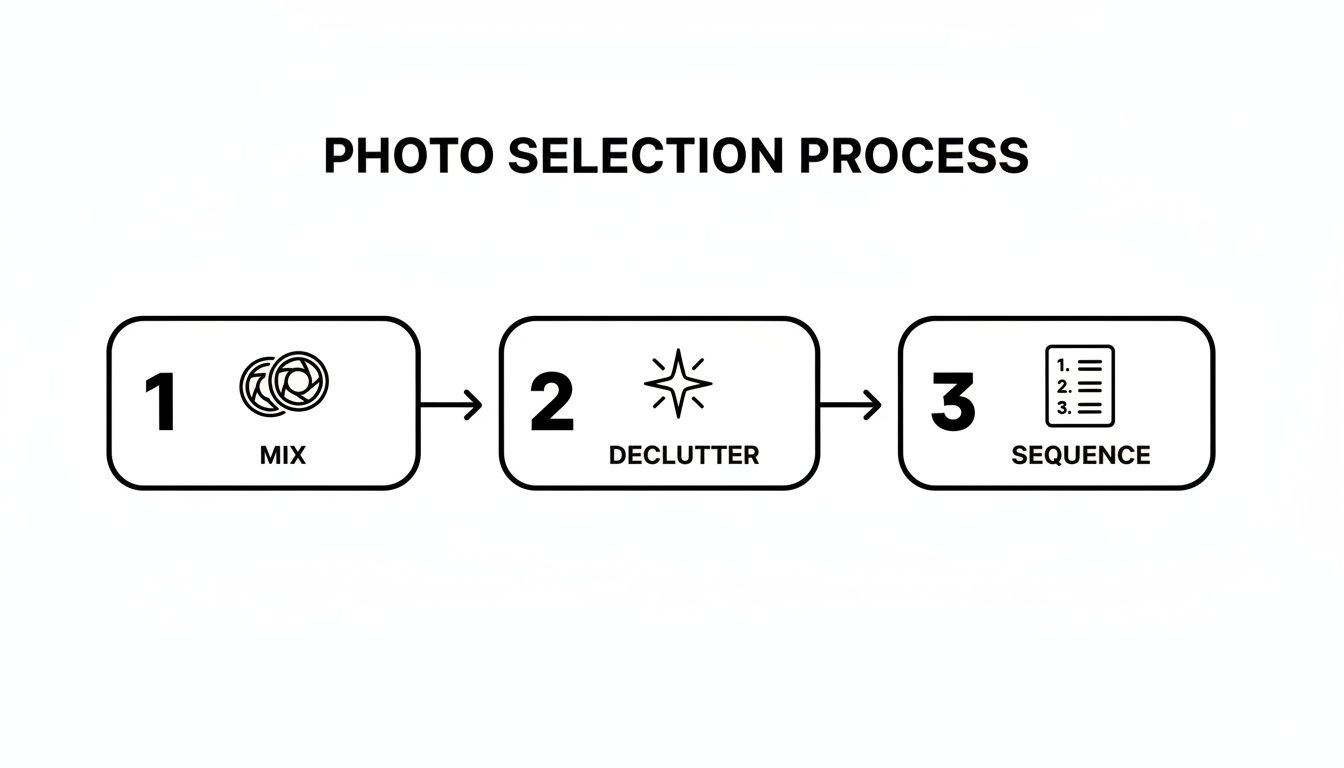
It really comes down to this: a thoughtful mix of shots, a clean presentation, and a logical sequence are the three pillars of a video that truly connects with buyers.
Pick Music That Sets the Right Mood
Never, ever underestimate the power of music. The right soundtrack can completely transform your video, elevating it from a simple property showcase to a genuinely emotional experience. Most video creation tools come with a library of royalty-free music, which is a must-have to avoid getting your videos flagged or removed from social media for copyright violations.
The music you choose should match the personality of the property and appeal to your target buyer.
- Upbeat and modern: Perfect for a chic downtown condo. Look for electronic or indie pop tracks.
- Calm and serene: A great fit for a family home in the suburbs. Gentle acoustic or ambient music works wonders.
- Elegant and classic: Ideal for a luxury estate. Orchestral or classical pieces can add a layer of sophistication.
The goal is for the music to complement the visuals, not compete with them. It should work in the background, subtly shaping how a viewer feels about the home.
End with a Clear Call-to-Action
Finally, your outro is just as crucial as your intro. This is your call-to-action (CTA), and it needs to be crystal clear. Don't leave people guessing what to do next.
End your video with your name, your brokerage, and a direct instruction like "Schedule Your Private Showing Today!" This simple command turns a passive viewer into a potential lead, bringing the story to a satisfying and productive conclusion.
Polishing Your Video for a Professional Finish
The initial draft your software creates is a fantastic starting point, but the real magic happens when you roll up your sleeves and add your own touch. This is where you can make sure every detail truly reflects the property's unique character and lines up with your marketing goals. Trust me, spending a few extra minutes here can turn a good home real video into a truly unforgettable one.
Don't be afraid to experiment. The first version is almost never the final one. I always tell agents to dive back into the editor and try re-rendering the video with different settings to see what clicks. Sometimes a tiny adjustment can make all the difference.
Fine-Tuning Your Visual and Audio Elements
Think about how camera movements make a potential buyer feel. A slow, gentle pan across the living room can convey luxury and space, while a quick dolly-in toward the kitchen island creates a sense of excitement. With tools like AgentPulse, you can re-render your project with unlimited edits on paid plans, so you can test out different styles without worry. When you're putting it all together, using advanced image-to-video tools can also make turning your photos into dynamic scenes a whole lot easier.
Music is another game-changer. If the first song doesn't quite capture the home’s vibe, swap it out. Audition a few different tracks from the royalty-free library until you find the one that perfectly complements the visuals and strikes the right emotional chord.
Your goal here is simple: make sure every single element—from the text on the screen to the motion and music—works together to tell a compelling story about the property.
Last but not least, give your intro and outro text a final once-over. Are there any typos? Is the font easy to read? Is your call-to-action crystal clear? These small details add up to create a polished, professional video. If you're looking for more ways to create great visual presentations from your photos, you might want to explore some of the best free slideshow software options out there.
Final Checks and Export Settings
Before you hit that final export button, take a minute for a quick but crucial checklist. This last look-over can catch simple mistakes that might undermine all your hard work and ensures your video is ready for prime time.
Your Pre-Export Checklist:
- Contact Info: Is your name, phone number, and brokerage information all correct and easy to read?
- Branding: Do your brand colors and logo match your other marketing materials?
- Call-to-Action (CTA): Is your final message impossible to miss? It should tell viewers exactly what to do next, like "Schedule a Showing Today."
When it comes to export settings, 1080p (HD) is the gold standard for real estate. This resolution gives you a crisp, clear picture that looks fantastic on everything from a phone to a large monitor, but the file size isn't so massive that it takes forever to upload. It’s the perfect balance of quality and practicality, making your home real video look sharp and professional everywhere you post it.
Getting Your Video Seen: A Smart Sharing Strategy
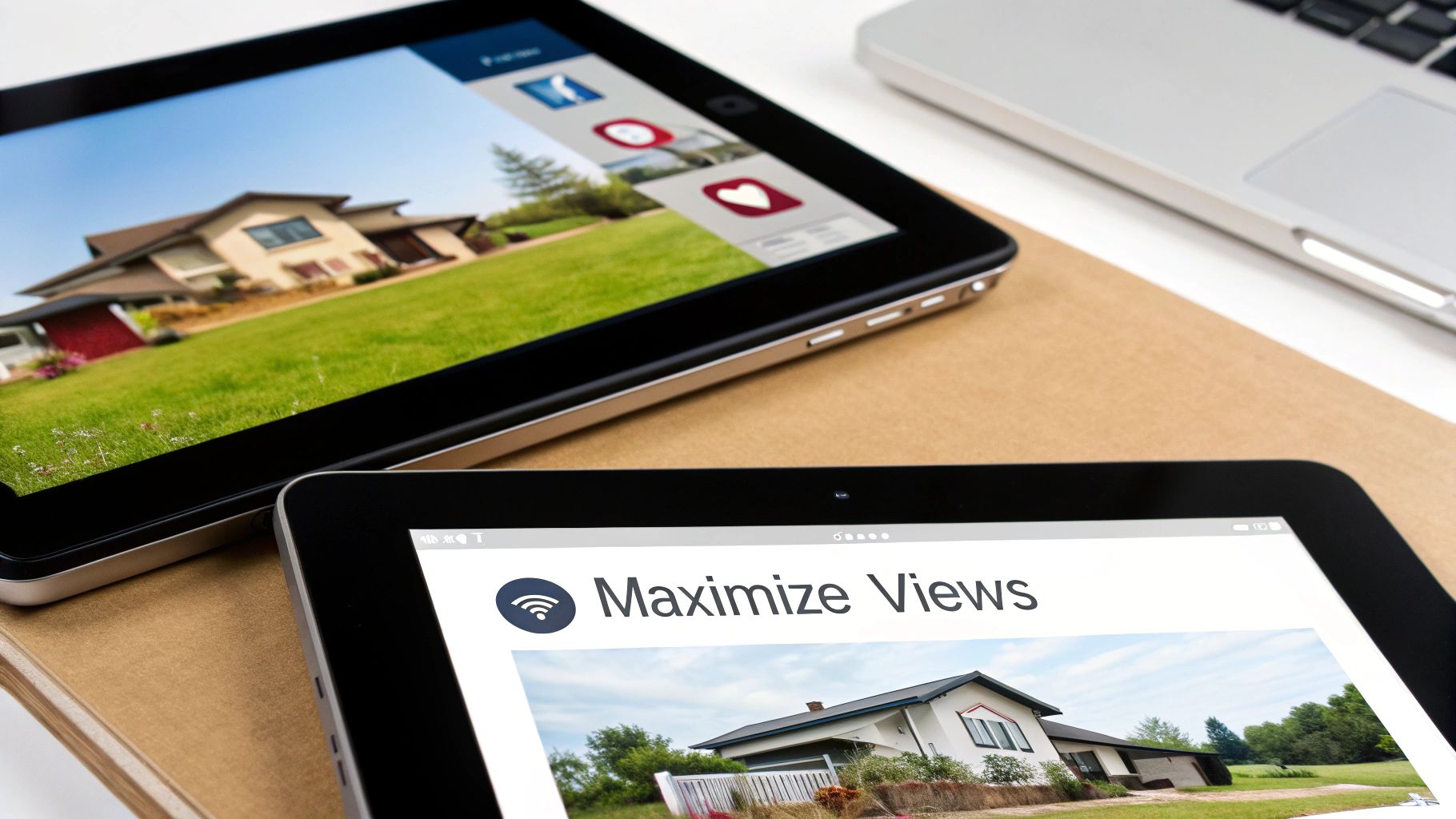
You've created a fantastic home real video—congratulations! But here's a hard truth: a brilliant video no one sees won't generate a single lead. The real work starts now. It's time to get that polished creation in front of as many potential buyers as possible.
This isn’t about just dropping a link and hoping for the best. It’s about a coordinated marketing push where your video, photos, and listing description all work together to build real momentum.
Winning on Social Media
Social media is your first and best stop for grabbing immediate attention, especially with vertical video. Platforms like Instagram Reels, Facebook, and YouTube Shorts are built for the kind of quick, eye-catching content that stops people from scrolling.
When you post, your caption is your secret weapon. Don't just list the address and price—that's boring. Your goal is to write a short, compelling hook that makes people curious.
Try one of these approaches:
- Ask a question: "Can you picture yourself enjoying coffee on this private patio?"
- Point out a killer feature: "The kitchen in this home is an absolute dream. Wait until you see the island!"
- Create a little urgency: "This stunning property just hit the market and won't last long. DM for details!"
Remember, social media is a two-way street. The more comments and shares you get, the more the algorithm will push your video out to a wider audience. Your caption is what gets that conversation started.
Hashtags are also crucial for getting discovered. You need a good mix of broad and specific tags to cast the widest net. For example, pair general tags like #RealEstate and #NewListing with hyperlocal ones like #DowntownAustinHomes or #ChicagoCondos. I also recommend using a branded hashtag, like #YourBrokerageName, to build your own brand recognition over time.
Don't Forget the MLS
While social media casts a wide net, the Multiple Listing Service (MLS) is where you connect with serious buyers and their agents. Uploading your video here is non-negotiable; it adds a layer of professionalism and gives a complete picture of the property.
But here’s the catch: every MLS has its own rules about video content. You have to know them and follow them.
Common MLS Video Guidelines to Watch For
- No Branding: Most MLS systems will shoot down any video that includes your name, brokerage logo, or contact info. This means you’ll likely need a clean, unbranded version of your video just for the MLS.
- Hosted Links: Don't expect to upload the video file directly. You'll almost always need to host it on a platform like YouTube or Vimeo and then paste the shareable link into the listing.
- Content Rules: The video has to be an honest representation of the property. No misleading shots or plugging your other services.
Before you upload, always double-check your local MLS board's specific guidelines. It’s a small step that ensures your listing stays compliant and gets seen by every agent in your area.
For a deeper dive into building your online presence, check out our guide on how to increase social media engagement. By pairing a strong social media game with a compliant MLS presence, you build a complete strategy that turns your hard work into views, leads, and offers.
Got Questions About Making Real Estate Videos?
Jumping into video creation for your listings can feel a little daunting. You want a professional look, but you don't have a Hollywood budget. I get it. Let's walk through some of the questions I hear most often from agents and photographers.
How Many Photos Do I Really Need for a Good Video?
For a video that’s about 60 to 90 seconds long, you'll want to aim for 15 to 25 solid, high-quality photos. This gives you enough variety to create a compelling visual tour without either rushing through the best features or dragging the pace down.
If you use too few pictures, the video can feel a bit thin and repetitive. On the other hand, cramming in too many can just overwhelm potential buyers. The trick is to have a good mix—get those wide shots, medium shots, and a few close-ups of key details to tell a complete story.
Can I Just Use My Favorite Song for the Music?
I know it’s tempting to drop in a popular track, but that’s a quick way to run into legal trouble. The easiest and safest route is to stick with the licensed, royalty-free music libraries that come with video creation tools.
Pro Tip: Using the built-in music library guarantees your video won't get flagged for copyright violations and taken down from Instagram or YouTube. These libraries have tracks specifically picked to match different home styles, so finding the right vibe is usually pretty straightforward.
Will an AI-Generated Video Actually Look Professional?
You'd be surprised. Modern AI tools have come a long way and can create videos that look incredibly polished and cinematic. We're not talking about a simple slideshow here. The software intelligently adds realistic camera movements—think smooth pans, dolly shots, and reveals—that feel like they were done by an experienced videographer.
Now, will it replace a full film crew for a sprawling multi-million dollar estate? Probably not. But for the vast majority of listings, it produces a high-converting video in minutes for a tiny fraction of the cost. This is how you can affordably elevate every single one of your listings, not just the luxury ones.
Seriously, How Long Does This Take?
This is where the magic happens. The whole process is shockingly fast. Once you've got your photos picked out, jotted down a quick intro and outro, and selected a music track, you’re pretty much done.
Generating a full, high-definition property video usually takes only about 2 to 5 minutes. You can literally go from a folder of photos to a marketing-ready video in less time than it takes to brew a pot of coffee. It means you can get new listings in front of buyers almost instantly.
Ready to turn your listing photos into videos that stop the scroll? With AgentPulse, you can create stunning property tours that grab attention, attract more buyers, and help you win more listings. Start creating your first video for free at AgentPulse.ai.