To get your house sold quickly, you need a game plan that starts weeks before you even think about listing it. This isn't just a suggestion; it's the most effective thing you can do to attract serious buyers and get an offer on the table fast. It all comes down to making small but powerful repairs, ruthlessly decluttering every single room, and getting the property professionally deep cleaned. Think of it as setting the stage for a great first impression.
Laying the Groundwork for a Quick Sale
The real secret to selling a home fast has nothing to do with luck. It’s all about the hard work you put in before that "For Sale" sign ever touches your lawn. We're not talking about sinking a fortune into a kitchen remodel. Instead, the focus is on knocking out all the little things that might make a buyer hesitate or try to lowball you.
Picture your home as a product on a shelf. The ones that fly off the shelf are always the ones that look clean, cared-for, and ready to go.
Your job is to create a clean, neutral space where buyers can immediately see themselves living. Every little fix, every box you pack away, is about making their vision for the future crystal clear. This is your best shot to shape how buyers see your home and get you to the closing table sooner.
Prioritize High-Impact Minor Repairs
Those little nagging issues you've learned to ignore? Buyers will spot them in a second. A leaky faucet or a scuffed-up wall can send a signal that the home hasn't been looked after, even if it's been your pride and joy.
Walk through your house with the eyes of a stranger—or better yet, have a brutally honest friend do it. Make a list of all the little things that need attention.
Focus on the quick fixes that pack the biggest punch. These aren't weekend-long projects; they're the small details that make the whole house feel polished.
- Leaky Faucets and Running Toilets: That constant drip... drip... drip sounds like a future plumbing bill to a buyer. Fixing a leaky faucet or a running toilet is usually cheap and stops them from imagining the worst-case scenario.
- Sticky Doors and Cabinet Hardware: Every door and drawer should open and close without a fight. Go around and tighten any loose handles or knobs. It gives a subtle but important sense of quality.
- Dingy Switch Plates and Outlet Covers: This is one of the easiest and cheapest upgrades you can make. You can replace every old, yellowed plastic cover in your house with crisp new ones for under $50, and it instantly makes the place feel cleaner.
- Patching Nail Holes and Scuffs: Grab a small tub of spackle and some touch-up paint. Go through every room and fill in the little dings and nail holes. It's tedious, but it makes your walls look brand new.
Declutter Like You're Moving Tomorrow
Clutter is the enemy of a quick sale. It shrinks rooms, blocks light, and makes it impossible for buyers to see past your stuff to the actual house. Decluttering is your chance to sell the one thing every buyer wants: space.
Buyers aren't there to admire your family photos or your book collection. A decluttered home lets them focus on the home's layout and features, making it easier for them to mentally move their own things in.
Get methodical about it. Go room by room with four boxes or piles: Keep, Store, Donate, and Discard. If something isn't essential for daily life or for making a room look good, it needs to be stored off-site. This means packing away most family photos, memorabilia, oversized furniture, and out-of-season clothes clogging up the closets.
You’re not just tidying up; you're merchandising. Aim for the clean, sparse feel of a boutique hotel. Once the clutter is gone, the final deep clean will make every surface—from the baseboards to the ceiling fans—absolutely shine for photos and showings.
Pricing Your Home to Attract Immediate Offers
Of all the levers you can pull when selling your house, pricing is easily the most powerful. Get it right, and you’ll have a flood of interest right out of the gate. Get it wrong, and you’ll hear nothing but crickets.
It’s completely natural to want to price your home based on what you paid, the memories you made, or what you need to net from the sale. But here’s the hard truth: buyers don’t care about any of that. They only care about one thing: market value.
This is where a real estate agent’s comparative market analysis (CMA) becomes your best friend. A good CMA isn’t just a printout of neighborhood sales; it’s a deep dive that stacks your home up against similar properties that have recently sold, are currently listed, or even those that failed to sell. Your job is to look at this data with a cool, objective head and see your home through a buyer’s eyes.
The Psychology of Strategic Pricing
Think for a moment about how people actually search for homes online. They use price filters, like $450,000 to $500,000. This is where a small pricing adjustment can make a massive difference in how many people see your listing.
Here's a classic example I see all the time: A seller insists on listing at $500,000. In doing so, they’ve just made their home invisible to every single buyer whose search maxes out at $499,999.
By simply pricing it at $499,000, you show up in both search brackets. You instantly get in front of a much larger pool of potential buyers, and psychologically, it just feels like a better deal. It's a simple move, but it’s incredibly effective.
Of course, your price needs to be backed up by a home that looks the part. The foundational work—repairs, decluttering, and cleaning—is what makes buyers feel your asking price is justified.
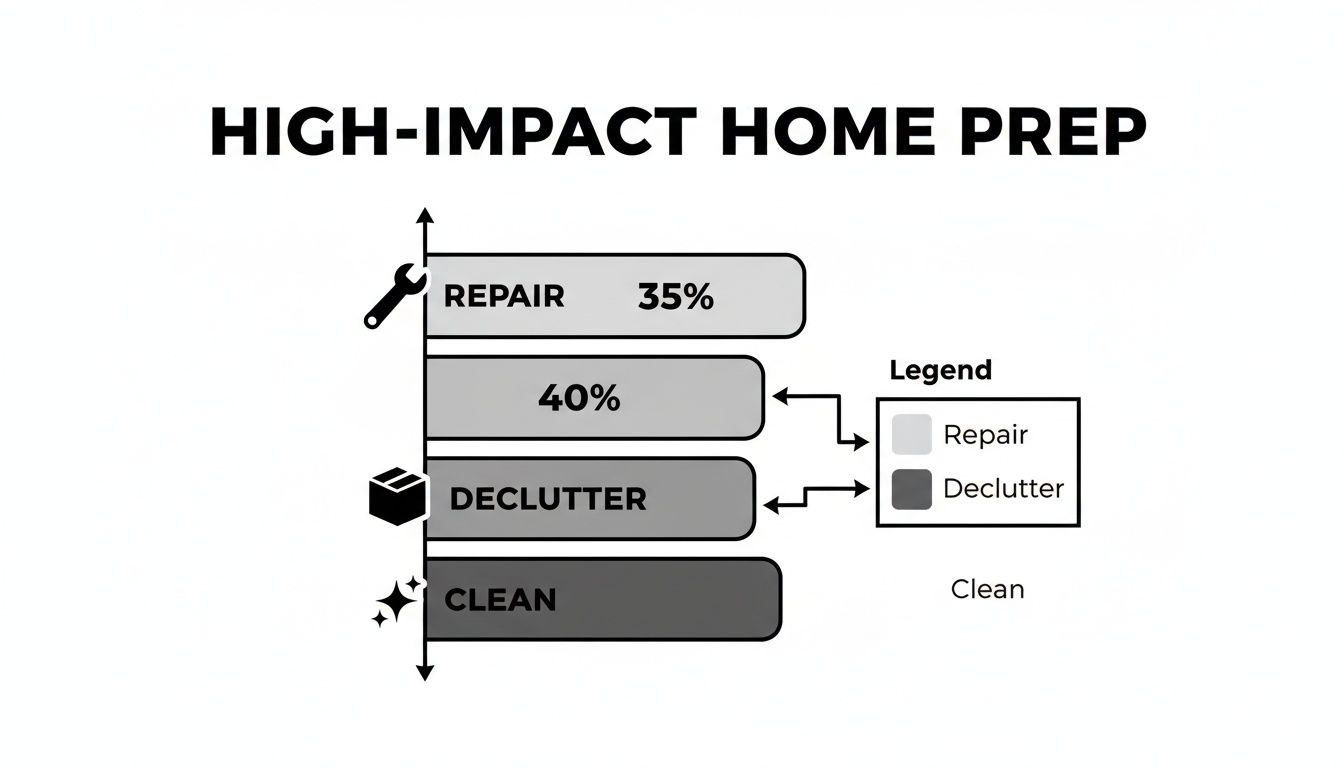
This prep work isn't just about aesthetics; it’s about giving buyers the confidence to make a strong offer.
Pricing Strategy Impact on Time to Sell
The initial list price sets the entire tone for your sale. A strategic price can attract multiple buyers and a quick sale, while an overly ambitious one can lead to a stale listing. The table below shows how different approaches typically play out.
| Pricing Strategy | Average Days on Market | Likelihood of Multiple Offers | Final Sale Price vs. List Price |
|---|---|---|---|
| Slightly Below Market | 7-14 days | High | Often 1-5% Over List Price |
| At Market Value | 21-30 days | Moderate | Typically 98-100% of List Price |
| Slightly Above Market | 45-60+ days | Low | Usually 95-97% of List Price (After Reductions) |
This comparison makes it clear: an aggressive, data-driven price from the start is your best bet for generating competition and achieving a fast, profitable sale.
Creating a Bidding War with an Accurate Price
It might feel counterintuitive, but one of the smartest ways to sell faster—and for more money—is to price your home just slightly below its perceived market value. An attractive price doesn't just catch the eye of one buyer; it catches the eye of many.
When multiple buyers feel they’ve found a great deal, it often sparks a bidding war. This is the ideal scenario. The competition creates a powerful sense of urgency and scarcity, which naturally drives the final sale price up, often past what you originally asked. You’re no longer negotiating down; buyers are competing to bid up.
The fastest path to a strong offer is setting a fair, data-backed price from day one. An overpriced home just sits there, collecting "days on market" that make buyers suspicious. It almost always leads to price cuts that signal desperation.
The numbers don't lie. A report from the National Association of Realtors found that homes priced within 5% of their true market value sell much faster than those that start too high. Even after a price drop, an initially overpriced home tends to linger, ultimately costing you both time and money.
An accurate price isn't just about getting an offer; it’s about getting the right offer from a serious buyer in the shortest time possible.
Creating Listing Photos That Stop the Scroll
Let's be blunt: your first showing isn't when a buyer walks through the door. It's the split second they see your listing on Zillow. Your photos are your digital curb appeal, and they are, without question, the single most important marketing tool you have.
Dark, blurry smartphone pics? Buyers will scroll right past. But crisp, professional images? They make people stop, click, and actually picture themselves living in your home.
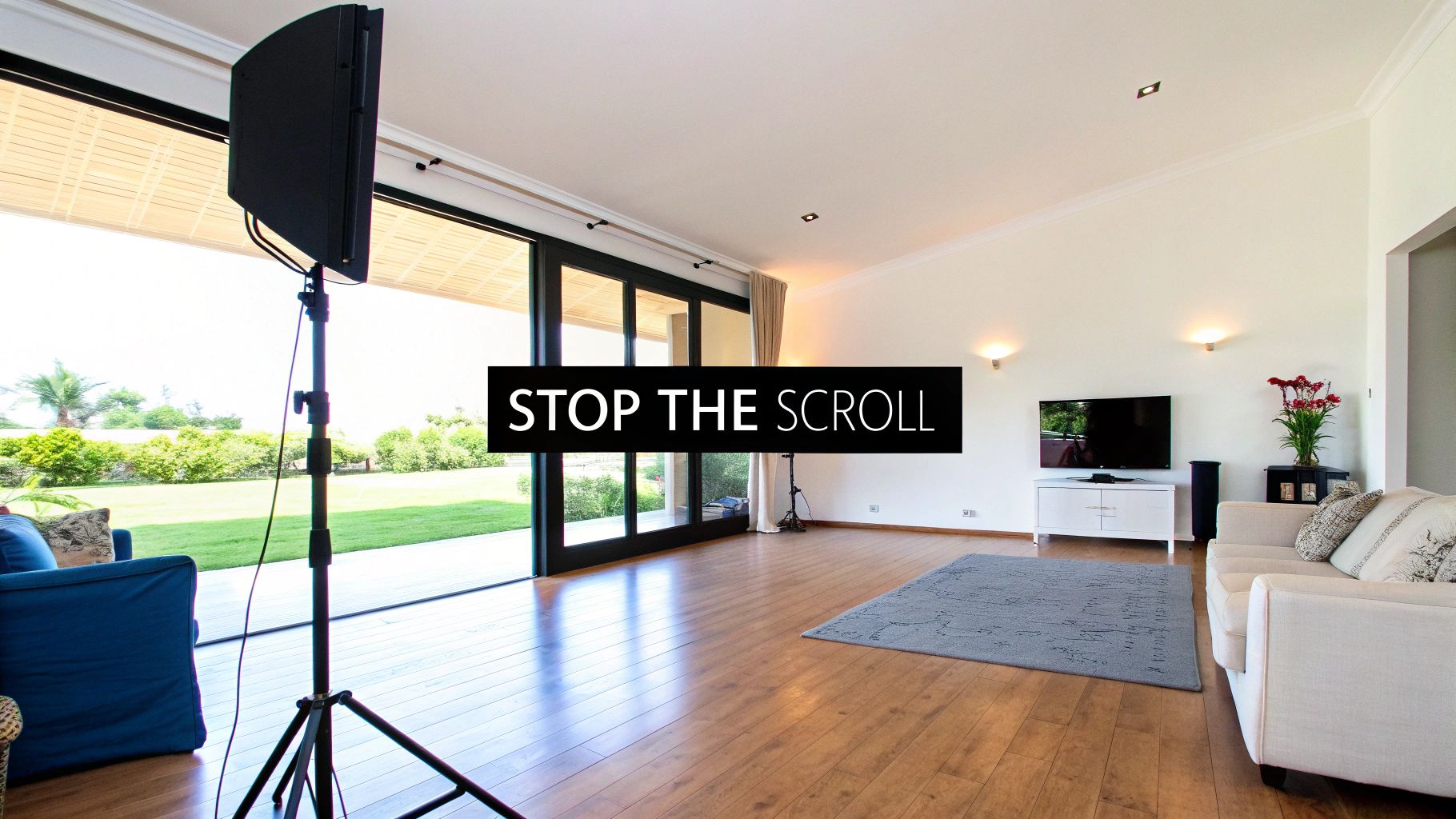
This is why hiring a professional real estate photographer is a non-negotiable part of the deal if you want to sell fast. These pros know exactly how to use lighting and angles to capture a room's true size and feel. They use special wide-angle lenses that make spaces look open and inviting—not like a funhouse mirror.
This isn’t just about pretty pictures; it’s about getting results. A great photographer will zero in on your home’s best assets, like the morning light pouring into the kitchen or the clean lines of the new bathroom vanity. For a deeper look at what separates a good shot from a great one, check out these essential real estate photography tips.
Go Beyond Still Photos with Immersive Media
While stunning photos are the starting point, today's buyers expect more. Adding immersive media to your listing is a powerful way to stand out and attract serious, qualified buyers before they even book a showing.
- 3D Virtual Tours: These are a game-changer, especially for out-of-town buyers. They let people "walk" through every room on their own time, filtering out anyone who isn’t a good fit.
- Drone Photography: Got a great yard, a pool, or a fantastic location near a park? Drone shots provide a perspective that ground-level photos simply can’t, showing off the entire property and its surroundings.
- Cinematic Video Tours: A well-made video tells a story. It showcases the flow of the home and highlights lifestyle features, like a cozy fireplace or a backyard patio perfect for summer barbecues.
The data backs this up. With over 90% of buyers starting their search online, a strong digital presence is critical. In fact, homes marketed with high-quality video and virtual tours have been shown to sell up to 68% faster than those with photos alone.
Using Video to Build Buyer Excitement
Video isn’t just a nice-to-have anymore; it's essential for getting a property sold quickly. But don't worry, this doesn't mean you need a Hollywood film crew. Modern tools have made it incredibly easy to create eye-catching video content.
Platforms like AgentPulse, for example, can take your professional photos and automatically turn them into a sleek, engaging video tour in just minutes. The software adds smooth, cinematic motion—like slow pans and reveals—and sets it all to music. The result is a professional-looking video that’s perfect for Instagram Reels, Facebook ads, or your MLS listing.
Pro Tip: A punchy, 30-second video reel highlighting your home's top three features will almost always get more shares and showing requests than a static photo gallery. It’s all about creating an emotional hook that photos can't quite capture on their own.
Consider adding a "twilight shoot" to your photography package. Taking photos at dusk with all the lights on creates a dramatic, warm, and incredibly inviting look. This single hero image can instantly make your listing feel more luxurious and valuable. These aren't just tricks of the trade; they're smart strategies for building a powerful marketing package that makes an unforgettable first impression.
Marketing Your Home Beyond the MLS
So, you've got stunning photos and a smart price. Great. But if you want to sell fast, you can't just list your home on the MLS and hope for the best. A fast sale comes from active, targeted marketing. This is the part where we stop passively waiting for buyers and start actively hunting for them.
It all starts with telling the right story. A fantastic listing description doesn’t just rattle off the number of bedrooms and bathrooms; it sells a lifestyle. It needs to paint a vivid picture of life in the home, turning cold facts into an emotional hook. This story becomes the foundation for your entire marketing push.
Crafting a Compelling Listing Story
Think about what makes your home special. Is it the way the morning sun floods the kitchen? Or that quiet, private backyard perfect for summer evenings? Maybe it's being just a short walk from the best coffee shop in town. These are the details that make a buyer stop scrolling.
Instead of writing, "3 bed, 2 bath with a fenced yard," try something more evocative: "Imagine waking up in a sun-drenched primary suite before enjoying your coffee on the private patio, all within a fully-fenced backyard oasis." See the difference? This approach helps buyers mentally move in.
A sharp agent will also weave in keywords that buyers are actually searching for. Think terms like "open concept," "updated kitchen," "home office," or the specific names of sought-after neighborhoods and school districts. This simple SEO tactic helps your listing pop up in more searches, boosting its visibility right out of the gate.
Launching a Targeted Digital Marketing Campaign
Once your listing is live, it’s go-time. You have to get it directly in front of the right eyeballs, and these days, that means meeting buyers where they are: on social media.
- Facebook and Instagram Ads: These platforms are goldmines for specific targeting. A skilled agent can run ads for your listing that target users in a certain zip code, people with interests like "first-time homebuyer," or even those who recently browsed sites like Zillow.
- Video Reels and Stories: Short-form video is dominating online engagement. A snappy 30-second video tour of your home set to trending music can rack up thousands of views on Instagram Reels. It's a dynamic, engaging format that static photos just can't compete with.
Don't underestimate the power of a "Coming Soon" campaign. By teasing the property on social media or to an email list a week before it hits the MLS, an agent can build a queue of interested buyers. This creates urgency and often lines up showings for day one.
Leveraging Pre-Market Buzz and Agent Networks
One of the most powerful, yet often overlooked, tools is a real estate agent's professional network. A well-connected agent can stir up serious interest before your home is even officially for sale. They can blast the listing out to other top agents in the area, some of whom might just have the perfect buyer waiting in the wings. For more ideas on getting your property seen, check out some of the best real estate marketing strategies the pros are using.
This pre-market push can be a total game-changer. It warms up the market, primes potential buyers, and creates a competitive buzz from the very start. By combining a compelling story with a digital blitz and some good old-fashioned networking, you create an unstoppable marketing machine designed to do one thing: sell your house faster.
Running Showings That Lead to Offers
Once your marketing engine is humming and you’ve got buyers interested, the real work begins. Now, it's all about the in-person experience. The goal for every single showing isn't just to display the house; it's to make potential buyers feel so at home that they start picturing where their own furniture will go. You’re selling a feeling, not just a floor plan.
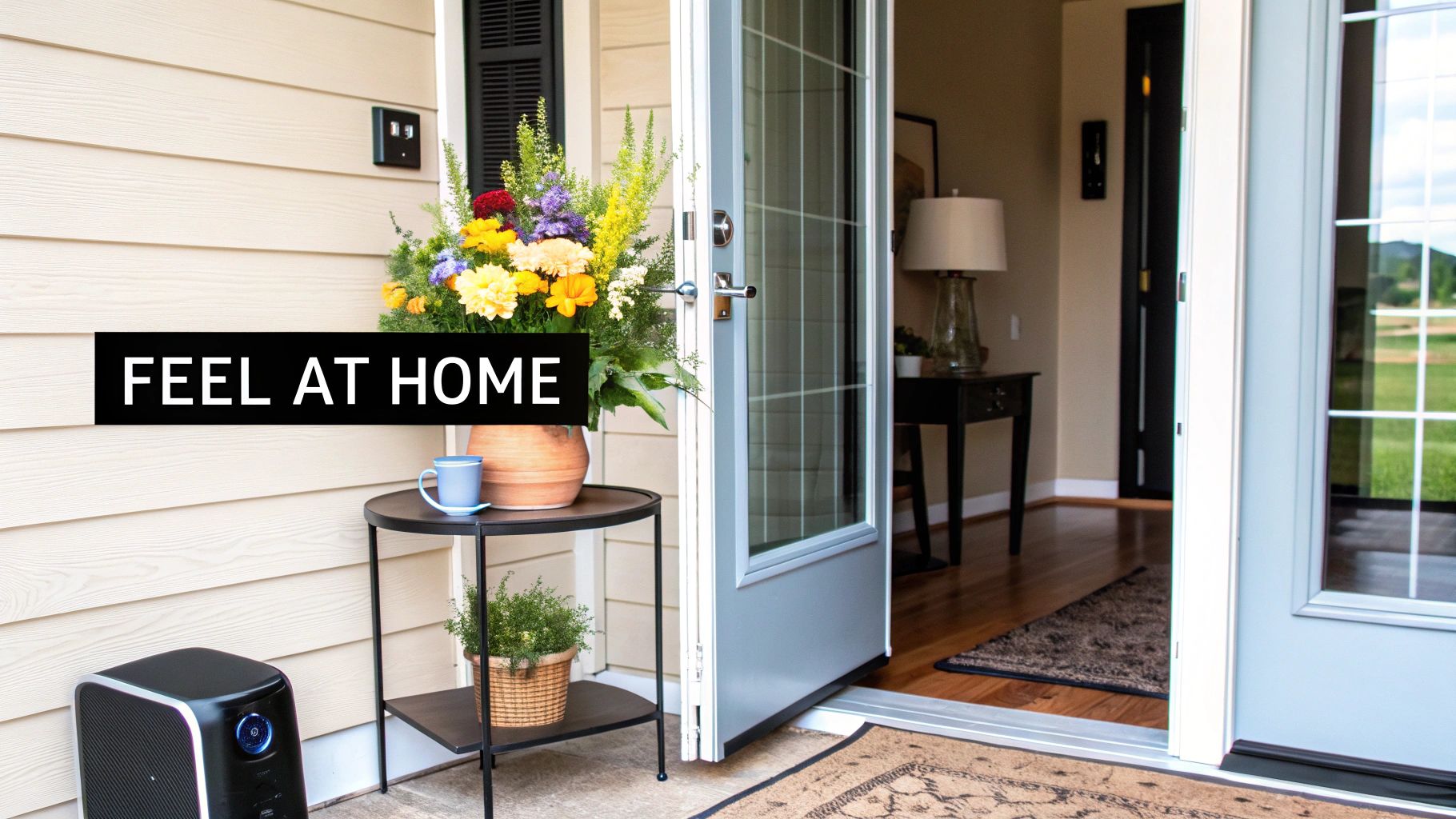
This is the moment where all that prep work—the minor repairs, the decluttering, the staging—really shines. A great showing is what bridges the gap between a listing on a screen and a place someone desperately wants to call their own. Every little detail matters.
The Pre-Showing Ritual
About an hour before anyone walks through the door, you should have a go-to routine to set the scene. This is more than a quick tidy-up; it’s about strategically appealing to every sense. Think of it like setting the stage for a great performance.
Here’s a simple but effective checklist:
- Let There Be Light: Open every single blind and curtain. Natural light is your best friend. Then, flip on every light in the house—from the main fixtures to the lamps in the corner and even the lights under the kitchen cabinets. A bright home feels bigger, cleaner, and way more inviting.
- Get the Temperature Just Right: Set the thermostat to a comfortable 68-70°F (20-21°C). The last thing you want is a buyer rushing through because they’re freezing or sweating. Comfort is key.
- Think About Scents (or Lack Thereof): The best smell is actually no smell at all. Steer clear of potent air fresheners or last-minute baking sprees. These can come off as trying to hide something (like pet odors or dampness) and can trigger allergies. Just open the windows for a bit beforehand to air things out for a clean, neutral scent.
- A Touch of Sound: Silence can feel awkward. Playing some soft, instrumental music quietly in the background—think mellow jazz or classical—can make the home feel more serene and sophisticated.
Making the Most of an Open House
An open house is a classic for a reason. It creates a burst of activity and a powerful sense of social proof. When buyers see other people admiring the home, it naturally creates a little friendly competition and a sense of urgency. The trick is to manage the event so it feels buzzing, not chaotic.
A savvy agent knows to schedule the open house at the perfect time, usually a Sunday afternoon, and will promote it heavily online for days beforehand. They'll be there to greet every person at the door, point out the home’s best features, and answer questions on everything from the property taxes to the local school district.
A successful showing allows a buyer to connect with the home on a personal level. The more they can visualize their own life unfolding within the walls, the more likely they are to make an offer.
Embracing Modern Showing Options
Let's face it, not every serious buyer can make it to an in-person tour, especially in today's market. Accommodating out-of-towners or people with tricky schedules is a non-negotiable part of selling a house quickly.
One of the best ways to do this is with a top-notch video walkthrough. I'm not talking about a clunky 3D tour, but a professionally shot video that guides a buyer through the home, showing off the layout and highlighting its best assets. It tells a story. To see what goes into a compelling one, check out this guide to the perfect real estate video walkthrough.
Finally, always ask for feedback. A good agent will follow up with every agent who brings a client through, asking for their candid thoughts. This information is gold. If three people in a row say the main bedroom feels dark, you know it's time to add another lamp. If someone mentions road noise, you can start pointing out the new, sound-dampening windows to the next group. These small pivots can make all the difference.
From Offer to Closing Table: Your Fast-Track Guide
Getting an offer feels like the finish line, but it’s really just the final lap. This is where you can either cruise to a quick closing or get bogged down in delays that can kill the whole deal. The key is to keep the momentum going. A signed contract is great, but a closed deal is what you're after.
The highest price on paper doesn't always translate to the most money in your pocket, especially if that offer crumbles before closing. You have to look at the whole picture to figure out which buyer is most likely to get you to the closing table without any drama.
Looking Beyond the Price Tag
When you’ve got a few offers in hand, it's easy to get tunnel vision and focus only on the biggest number. I've seen it happen time and time again. But a truly great offer is about more than just the price—it's about the buyer's financial strength and the simplicity of their terms.
- Cash is still king. An all-cash offer means no lender, no appraisal, and no underwriting headaches. It's the cleanest and fastest way to close.
- A solid pre-approval is the next best thing. Make sure it’s a full pre-approval from a reputable lender, not just a flimsy pre-qualification. This shows the buyer's finances have been seriously vetted.
- Fewer contingencies mean fewer hurdles. Contingencies for financing, appraisal, and inspection are common, but each one is an opportunity for the deal to fall through. An offer with fewer strings attached is always a stronger bet.
- A healthy earnest money deposit shows they’re serious. We’re talking 1-3% of the purchase price. When a buyer puts more skin in the game, they’re far less likely to get cold feet and walk away.
The cleanest offer is almost always the fastest. A buyer who waives a contingency or comes in with a hefty down payment is signaling they are serious, confident, and ready to move quickly.
Negotiation Strategies for a Speedy Close
Negotiation is a bit of a dance. You need to be firm on what matters, but flexible enough to keep a great buyer at the table. It’s all about creating a win-win that keeps things moving forward.
Think beyond just haggling over the price. Your timeline is also a negotiable asset. For instance, you might accept an offer that's a few thousand dollars lower if the buyer agrees to a seven-day inspection period instead of the standard ten, or if they can close a week earlier. That trade-off can easily be worth it if your main goal is to sell fast.
Getting Ahead of Common Hurdles
Even the best-laid plans can hit a snag. In my experience, most of the drama between contract and closing comes from two places: the home inspection and the appraisal. Anticipating these can save you a world of hurt.
Navigating Inspection Issues
Listen, no home is perfect. The inspector is paid to find flaws, and they will. A good approach is to stay calm and be proactive. If the report points out a leaky faucet or a faulty outlet, just agree to fix it. Bickering over small, legitimate repairs only creates friction and slows everything down.
If a bigger, unexpected problem comes up, be ready to negotiate. Offering a credit so the buyer can handle the repair after they move in is often the quickest way to resolve the issue and keep the closing on track.
Handling an Appraisal Gap
In a hot market, it's pretty common for an offer to come in higher than the bank's appraisal value. This is called an appraisal gap, and it can stop a deal in its tracks if the buyer needs a loan for the full amount.
If the appraisal comes in low, you've got a few moves:
- The buyer can make up the difference in cash.
- You can agree to lower the sale price to match the appraisal.
- You can both meet in the middle—they bring a little extra cash, and you drop the price a bit.
- You can challenge the appraisal. If your agent finds real errors or can provide better comparable sales the appraiser missed, you can submit a rebuttal.
Having a game plan for these moments is what separates a quick, stress-free sale from one that gets stuck in limbo. By vetting your offers carefully and staying a step ahead, you can pave a smooth path straight to the closing table.
Transform your listing photos into stunning, scroll-stopping videos in minutes with AgentPulse. Our AI-powered platform creates cinematic video tours that capture buyer attention and drive more inquiries, helping you sell your properties faster than ever. See how it works at AgentPulse.