In today's competitive market, standing out is no longer optional, it's essential. Relying on outdated methods means leaving money on the table and watching motivated buyers and sellers pass you by. To thrive, real estate professionals including agents, photographers, and property managers need a modern, multi-channel approach that captures attention, builds trust, and drives conversions. The difference between a stagnant listing and a quick sale often comes down to the quality and execution of your marketing plan.
This is where having a proven playbook becomes critical. We have compiled the definitive guide to the best real estate marketing strategies designed to deliver tangible results. This isn't just another list of generic tips; it's a comprehensive blueprint for generating high-quality leads, maximizing your return on investment, and building a brand that dominates your local market. Forget abstract theories and vague advice. We are focused on practical application.
Inside, you will find a breakdown of 10 high-impact strategies, ranging from immersive virtual tours to sophisticated email nurture campaigns. Each section provides:
- Step-by-step implementation guidance to get you started immediately.
- Key Performance Indicators (KPIs) to accurately track your success.
- Real-world examples and templates you can adapt for your own business.
Whether you're an agent aiming to secure more listings, a property manager looking to reduce vacancies, or a real estate photographer expanding your service offerings, these strategies will provide the clarity and tools needed to achieve your goals. Let's dive into the tactics that will unlock your next sale and set you apart from the competition.
1. Virtual Tours and 3D Walkthroughs
Virtual tours and 3D walkthroughs are interactive digital models of a property. They give potential buyers an immersive, 24/7 open house experience from anywhere in the world, using their computer or smartphone. This technology stitches together 360-degree photos or uses 3D modeling to create a seamless "walkable" tour, making it one of the best real estate marketing strategies for engaging a wider audience.
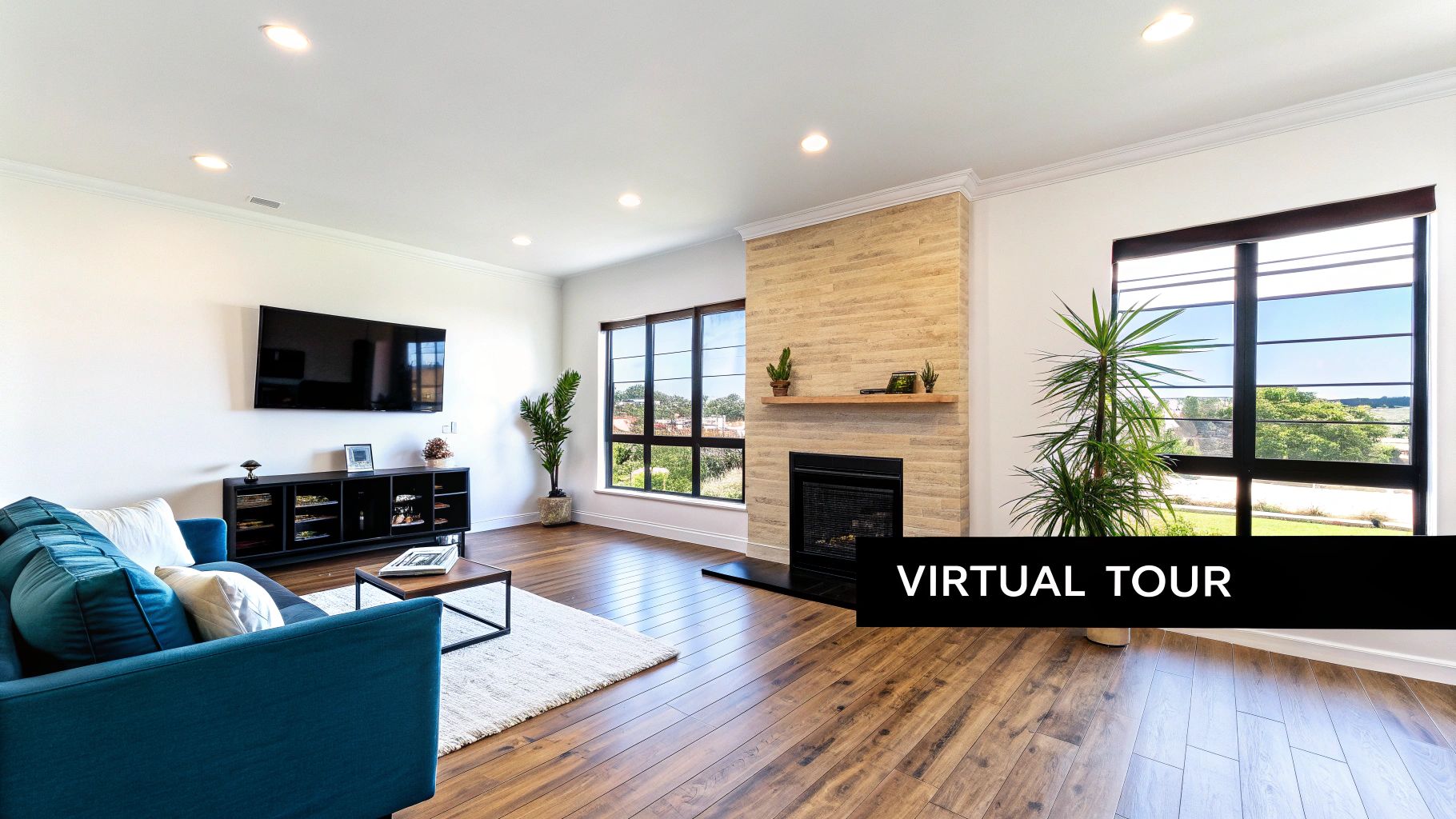
These tours significantly reduce the need for initial in-person visits, filtering for more serious, qualified buyers. Leading platforms like Zillow now integrate features such as their Zillow 3D Home tour, and companies like Matterport have become industry standards for creating high-fidelity digital twins of properties.
Why This Strategy Works
This approach directly addresses modern buyer behavior. It caters to remote buyers, out-of-state investors, and busy local prospects who want to thoroughly vet a property before scheduling a showing. The result is a more efficient sales process for agents and a more convenient experience for buyers. Listings with virtual tours often see higher engagement and spend less time on the market.
How to Implement It
- Choose Your Technology: Decide between a DIY approach with a 360-degree camera and Zillow's 3D Home app or hiring a professional service like Matterport for a high-end, polished result.
- Stage the Property: Prepare the home just as you would for a professional photoshoot. Declutter, clean, and ensure optimal lighting in every room.
- Scan and Create: Follow the instructions of your chosen software or work with your photographer to capture every room and space.
- Publish and Promote: Embed the tour on your website, the MLS listing, and share it across social media and in email newsletters.
Quick Tips for Success
- Highlight Key Features: Use information tags or "Mattertags" to point out specific details like new appliances or custom countertops.
- Ensure Mobile Compatibility: Most buyers will view the tour on their phones, so test it on multiple devices.
- Measure Engagement: Track how many people view the tour and how much time they spend "in" the property.
By adopting virtual tours, you provide unparalleled access and transparency, building trust and accelerating the buyer's journey. To dive deeper into this topic, explore how to create a compelling real estate video walkthrough.
2. Social Media Marketing and Content Strategy
Social media marketing for real estate involves using platforms like Instagram, Facebook, TikTok, and LinkedIn to showcase properties, build brand authority, and engage directly with potential clients. This strategy moves beyond simple listings to create a consistent stream of valuable content, such as market updates, home-buying tips, and community highlights, that attracts and converts followers into leads.

It has become one of the best real estate marketing strategies because it allows agents to build a personal brand and foster a community around their business. For instance, luxury brokerages like The Agency use Instagram to post high-production property videos, while agents like Justin Stamper leverage TikTok for short, engaging real estate content that reaches millions.
Why This Strategy Works
This approach meets buyers and sellers where they already spend their time. It humanizes the agent, building trust and rapport long before a transaction begins. By consistently providing value, you position yourself as a local market expert. Furthermore, social media advertising offers powerful targeting tools, allowing you to reach specific demographics, locations, and interest groups with laser precision, ensuring your marketing dollars are spent efficiently.
How to Implement It
- Select Your Platforms: Focus on 2-3 platforms where your target audience is most active. Instagram and Facebook are great for visual property showcases, while LinkedIn is ideal for connecting with professionals and investors.
- Develop a Content Calendar: Plan your posts in advance to ensure consistency. Mix property listings with educational content, client testimonials, and behind-the-scenes glimpses of your work.
- Engage Authentically: Respond to comments and messages promptly. Ask questions in your captions and use interactive features like polls and Q&As in your Stories to boost engagement.
- Run Targeted Ads: Use Facebook and Instagram Ads Manager to create campaigns for new listings or lead generation. Target users by location, income, and life events like "likely to move."
Quick Tips for Success
- Be Consistent: Aim to post at least 3-5 times per week to stay top-of-mind with your audience.
- Use Video Content: Prioritize short-form video like Instagram Reels and TikToks, as they generate the highest engagement.
- Include a Clear CTA: Every post should have a purpose. Tell your audience what to do next, whether it's "DM for details," "Click the link in bio," or "Tag a friend who would love this home."
- Analyze Your Metrics: Regularly review your analytics to see what content resonates most with your audience and adjust your strategy accordingly.
By building a robust social media presence, you create a powerful, scalable engine for lead generation and brand building. To learn more, discover these ideas for social media content for realtors.
3. Email Marketing and Nurture Campaigns
Email marketing is the strategic use of email to build relationships with prospects, nurture leads, and stay top-of-mind with past clients. Through automated nurture campaigns, agents can deliver timely, relevant content that guides subscribers through every stage of the real estate journey, from initial interest to closing and beyond. This consistent communication solidifies your position as a trusted market expert.
This approach transforms a cold database into a warm pipeline of potential business. By segmenting your audience and tailoring messages, you can send curated property alerts to active buyers, market updates to homeowners, and valuable tips to first-time sellers. Platforms like ActiveCampaign and HubSpot make it easy to automate these workflows.
Why This Strategy Works
Real estate is a long-game, and not every lead is ready to transact immediately. Nurture campaigns keep you connected with prospects over months or even years, ensuring you are the first person they call when they are ready. It's a cost-effective way to maximize the value of every lead you generate, providing a high ROI compared to other marketing channels.
How to Implement It
- Build and Segment Your List: Collect emails from your website, open houses, and social media. Segment your contacts into lists like "Active Buyers," "Past Clients," and "Local Homeowners."
- Choose an Email Platform: Select a service like Mailchimp, Constant Contact, or a more advanced CRM with email capabilities.
- Create Your Content: Develop a mix of content, including monthly newsletters, new listing announcements, local market reports, and helpful blog posts.
- Set Up Automation: Design nurture sequences for new leads. For example, a new buyer lead could receive a welcome email, followed by a guide to the buying process, and then weekly property alerts.
Quick Tips for Success
- Balance Your Content: Follow the 70/30 rule: 70% of your content should be educational and valuable, while 30% can be promotional.
- Write Compelling Subject Lines: Keep them short, personalized, and intriguing to boost open rates.
- Optimize Send Times: Test sending emails on different days and times (Tuesday to Thursday mornings are often best) to see what works for your audience.
- Always Be Mobile-Friendly: A majority of emails are opened on mobile devices, so ensure your templates are responsive.
By consistently delivering value to their inboxes, you build lasting relationships and a predictable stream of business. For those looking to streamline this process, discover the best real estate marketing automation software to put your campaigns on autopilot.
4. Content Marketing and Blog Strategy
Content marketing is the strategic creation and distribution of valuable, relevant content to attract and retain a clearly defined audience. For real estate, this involves publishing blog posts, local market reports, and guides that answer potential clients' questions, establishing you as a trusted authority and improving your search engine visibility. It’s a powerful, long-term approach that draws organic traffic to your website.
This strategy moves beyond direct sales pitches to offer genuine value, building relationships before a transaction is even considered. Successful examples include Zillow’s extensive home-buying guides and hyper-local agent blogs that rank #1 for neighborhood-specific searches like "best schools in [City Name]."
Why This Strategy Works
This is one of the best real estate marketing strategies because it builds trust and captures leads early in their journey. Homebuyers and sellers have countless questions; by providing the answers, you become their go-to resource. It generates qualified, inbound leads who are already seeking expertise, making conversions smoother and more natural than with traditional outbound marketing.
How to Implement It
- Identify Your Niche: Focus on a specific audience, like first-time homebuyers, luxury clients, or people relocating to your city.
- Conduct Keyword Research: Use tools like Ahrefs or SEMrush to find what questions your audience is searching for. Target long-tail keywords (e.g., "cost of living in [Your City] vs. [Nearby City]") for less competition.
- Create a Content Calendar: Plan topics for the next 3 months to ensure consistency. Include blog posts, local market updates, and neighborhood spotlights.
- Write and Optimize: Create comprehensive, high-quality content (aim for 1,500+ words on core topics). Optimize titles, headers, and meta descriptions for your target keywords.
- Promote Your Content: Share your new posts across your social media channels, in your email newsletter, and on platforms like Medium to drive traffic.
Quick Tips for Success
- Be Hyper-Local: Create content that no national portal can replicate. Interview local business owners or write a guide to the best dog parks in your area.
- Update Old Content: Keep your posts relevant by refreshing data and statistics annually. This signals to Google that your content is still valuable.
- Incorporate Visuals: Use high-quality photos, infographics, and videos to make your content more engaging and shareable.
By consistently creating valuable content, you build a sustainable marketing asset that works for you 24/7, attracting clients and solidifying your reputation as a market leader.
5. Video Marketing and YouTube Strategy
Video marketing involves creating and distributing engaging video content across platforms like YouTube and social media. For real estate, this includes dynamic property tours, agent introductions, neighborhood guides, and expert market analysis. This content captures attention far more effectively than static photos, making it one of the best real estate marketing strategies for building a personal brand and showcasing properties in detail.
From high-production luxury tours seen on channels like Enes Yilmazer's to practical advice from agents like Graham Stephan, video has proven its power. It allows agents to connect with clients on a more personal level, establishing trust and authority long before the first phone call. Platforms like YouTube act as powerful search engines, helping you attract clients who are actively researching the market.
Why This Strategy Works
Video content builds a strong "know, like, and trust" factor, which is crucial in a relationship-based industry like real estate. It allows potential clients to see your personality and expertise, creating a connection that text and images cannot replicate. Videos also have higher engagement rates and are favored by social media algorithms, increasing your organic reach and lead generation potential.
How to Implement It
- Define Your Content Pillars: Decide on your main video topics. Good starting points include property tours, neighborhood profiles, market updates, and home-buying/selling tips.
- Gather Basic Equipment: Start with a modern smartphone, a tripod, and a simple lavalier microphone for clear audio. You can upgrade your camera and lighting as you grow.
- Shoot and Edit: Film your content with good lighting and stable shots. Use user-friendly editing software like CapCut or iMovie to add text, music, and branding.
- Optimize for YouTube: Create a branded YouTube channel. Write keyword-rich titles and descriptions for each video, and design eye-catching custom thumbnails to increase click-through rates.
- Promote Everywhere: Share your video on your website, social media profiles, and in your email newsletter. Embed property tours directly into your MLS listings where permitted.
Quick Tips for Success
- Hook Viewers Immediately: Grab attention within the first 3-5 seconds to prevent viewers from scrolling past.
- Create Playlists: Organize your videos into playlists by neighborhood, property type, or content series (e.g., "First-Time Homebuyer Tips").
- Use YouTube Shorts: Create short, vertical videos for quick tips, market stats, or behind-the-scenes content to reach a wider audience.
- Add Captions: A majority of social video is watched without sound. Adding captions makes your content accessible and boosts engagement.
By consistently creating valuable video content, you can build a powerful marketing engine that attracts, educates, and converts your ideal clients. For a deeper look, check out these essential real estate video marketing ideas.
6. Paid Advertising (Google Ads, Facebook Ads, Zillow Ads)
Paid digital advertising involves strategically placing ads on search engines, social media platforms, and real estate portals to reach highly targeted audiences. Unlike organic marketing, which takes time to build momentum, paid ads provide immediate visibility, allowing agents to generate leads, promote listings, and build brand awareness with precision and speed. It's one of the best real estate marketing strategies for achieving measurable results quickly.
This strategy allows you to target potential clients based on specific demographics, interests, and online behaviors. For example, you can run Google Ads for users searching "homes for sale in [your city]" or launch Facebook ads targeting individuals who have shown interest in Zillow. This granular control ensures your marketing budget is spent reaching the most qualified prospects.
Why This Strategy Works
Paid advertising cuts through the noise and places your message directly in front of active buyers and sellers. It offers unparalleled targeting capabilities, from geographic location down to life events like "recently married," which often correlate with homebuying. The immediate feedback and detailed analytics allow you to track your return on investment and refine your campaigns in real time for optimal performance.
How to Implement It
- Define Your Goal and Platform: Determine if you want leads, website traffic, or brand awareness. Choose your platform accordingly: Google Ads for high-intent searchers, Facebook/Instagram for demographic targeting, and Zillow Premier Agent for active homebuyers.
- Set Your Budget and Audience: Establish a daily or monthly ad spend. Use the platform’s tools to define your target audience by location, age, income, and interests.
- Create Compelling Ad Copy and Visuals: Write clear, benefit-driven ad copy and use high-quality photos or videos of your properties. A/B test different versions to see what resonates most.
- Launch and Monitor: Go live with your campaign but don’t just "set it and forget it." Monitor key metrics like click-through rate (CTR), cost per click (CPC), and conversion rate. Adjust your bids, targeting, and creative based on performance data.
Quick Tips for Success
- Use Retargeting: Show ads to people who have previously visited your website to stay top-of-mind.
- Leverage Negative Keywords: In Google Ads, add negative keywords (e.g., "rent," "apartments") to prevent your ads from showing to irrelevant searchers.
- Optimize Landing Pages: Ensure the page users land on after clicking your ad is relevant, fast-loading, and has a clear call-to-action.
- Track Conversions Accurately: Set up conversion tracking to understand which ads are driving actual leads and sales.
By investing in paid advertising, you gain a powerful tool for generating a predictable flow of leads and staying competitive. For more insight into building a robust online presence, consider reading about the fundamentals of real estate digital marketing.
7. Networking and Referral Programs
Networking and referral programs are marketing strategies centered on building and leveraging strategic relationships to generate new business. This approach utilizes the trust inherent in personal recommendations from past clients, local business owners, community leaders, and other real estate professionals to create a sustainable and high-conversion lead pipeline. It is one of the best real estate marketing strategies for long-term, sustainable growth.
Unlike paid advertising, this method relies on nurturing your sphere of influence to produce warm leads that are already predisposed to trust you. Companies like Keller Williams have built a powerful culture around internal agent referrals, and coaching programs like Brian Buffini's are founded on the principle of working by referral. The system is simple: deliver exceptional service and then systematically encourage those happy clients and partners to recommend you.
Why This Strategy Works
Referral marketing has one of the highest conversion rates of any lead source because it comes with built-in social proof. A recommendation from a trusted friend or colleague bypasses the initial skepticism many consumers have. This leads to a shorter sales cycle, a higher likelihood of closing, and clients who are often more loyal and easier to work with. It's a cost-effective way to build a business that runs on reputation rather than ad spend.
How to Implement It
- Identify Key Referral Sources: Create a list of past happy clients, local professionals (mortgage brokers, attorneys, contractors), community leaders, and other real estate agents in different markets.
- Define Your Offer: Decide on your referral incentive. This could be a thank-you gift, a gift card, or a formal monetary bonus for licensed professionals where legally permitted.
- Create a System: Develop a simple process for people to send you referrals, such as a dedicated landing page or a simple email introduction protocol. Use a CRM to track who referred whom.
- Communicate and Nurture: Regularly stay in touch with your network through newsletters, client appreciation events, or one-on-one check-ins. Don't just ask for business; provide value to them as well.
Quick Tips for Success
- Ask Systematically: Make asking for referrals a standard part of your closing process.
- Reciprocate: Be a source of good referrals for your partners. Send business their way to strengthen the relationship.
- Acknowledge Immediately: Thank every person who sends you a referral, regardless of whether it closes.
- Join a Network: Participate in local business groups like BNI (Business Network International) or your local Chamber of Commerce.
By building a robust network, you create a powerful, self-sustaining marketing engine. For more on relationship-based marketing, learn about how top agents build their sphere of influence.
8. SEO Optimization and Local Search Strategy
Search Engine Optimization (SEO) for real estate involves optimizing your website and online profiles to rank higher in search results, particularly for local queries. This strategy ensures you appear prominently when potential clients search for terms like "real estate agent in [Your City]" or "homes for sale in [Your Neighborhood]," making it one of the most powerful and sustainable real estate marketing strategies available.
The goal is to capture high-intent leads directly from search engines like Google. A strong local SEO presence means your business shows up in the Google Maps "local pack," organic search results, and local directories, building authority and generating a consistent stream of free, inbound leads.
Why This Strategy Works
This approach targets buyers and sellers at the exact moment they are actively looking for real estate services. Unlike outbound marketing, local SEO connects you with a warm audience already seeking your expertise. A high ranking builds credibility and trust, as users inherently see top search results as more reputable and relevant.
How to Implement It
- Claim Your Google Business Profile: This is the cornerstone of local SEO. Fill out every section completely with accurate business information, high-quality photos, and service details.
- Create Neighborhood Pages: Build dedicated pages on your website for each neighborhood or community you serve. Include local market data, area photos, and listings.
- Build Local Citations: Get your business listed with a consistent Name, Address, and Phone number (NAP) across major real estate portals like Zillow and Realtor.com, as well as local business directories.
- Gather Reviews: Actively encourage satisfied clients to leave reviews on your Google Business Profile. Respond to all reviews, both positive and negative, to show you are engaged.
Quick Tips for Success
- Use Local Keywords: Naturally incorporate phrases like "[Neighborhood] homes for sale" and "[City] real estate agent" in your website content, blog posts, and page titles.
- Ensure Mobile-Friendliness: Your website must be fast and easy to navigate on a smartphone, as most local searches happen on mobile devices.
- Build Local Backlinks: Get links to your website from local businesses, community organizations, or local news sites to boost your domain authority.
9. Open Houses and Live Events
Open houses and live events are in-person gatherings designed to showcase a property, build community relationships, and generate qualified leads. Far more than just a simple showing, these events create a memorable, hands-on experience, allowing potential buyers to connect with a property on an emotional level and giving agents an opportunity for direct, face-to-face engagement.
This strategy extends beyond the traditional weekend open house. Modern agents host a variety of events, from first-time homebuyer workshops at a local library to exclusive broker-only tours and even charity events tied to a specific listing. These gatherings position the agent as a community expert and a valuable resource.
Why This Strategy Works
Despite the rise of digital tools, nothing fully replaces the impact of walking through a home. Live events build genuine connections and create a sense of urgency as buyers see other interested parties. They provide immediate feedback and allow agents to answer questions on the spot, overcoming objections and building trust faster than any online interaction.
How to Implement It
- Plan and Promote: Schedule the event for a peak time (e.g., Saturday from 1-4 PM). Promote it heavily across social media, your email list, the MLS, and local community sites at least one to two weeks in advance.
- Stage for Success: Prepare the property to create a welcoming atmosphere. This includes deep cleaning, decluttering, and adding small touches like fresh flowers, soft music, and light refreshments.
- Prepare Your Materials: Have a professional sign-in sheet ready to capture visitor information. Also, provide valuable takeaways like property feature sheets, neighborhood guides, or market reports.
- Engage and Follow Up: Greet every visitor, ask open-ended questions to understand their needs, and provide a tour. Most importantly, follow up with every lead within 24 hours to thank them for coming and offer further assistance.
Quick Tips for Success
- Use High-Quality Signage: Place clear, branded signs at key intersections to guide visitors to the property.
- Capture Content: Take photos and short videos during the event to use for social media posts, showcasing a busy and successful open house.
- Gather Feedback: Ask visitors for their honest opinion on the home’s price, condition, and features to provide valuable insights to your sellers.
By mastering the art of the open house, you transform a simple showing into a powerful lead-generation event, making it one of the most enduring and effective real estate marketing strategies. To learn more about capturing leads, check out these real estate lead generation ideas.
10. Personal Branding and Thought Leadership
Personal branding is the process of positioning yourself as a trusted authority and the go-to expert in your market. It goes beyond simple marketing; it’s about building a reputation and a following based on your unique expertise, values, and story. This strategy helps you stand out in a crowded industry, attracting clients who are drawn to your credibility and specific approach.
By establishing yourself as a thought leader, you move from chasing leads to attracting them. High-profile figures like Ryan Serhant and Barbara Corcoran have used this to build empires, but the principles work at any scale. When clients see you as a knowledgeable guide rather than just a salesperson, they are more likely to seek you out and trust your advice.
Why This Strategy Works
This strategy builds long-term, sustainable business by creating a powerful moat of credibility that competitors can't easily replicate. It directly addresses a client's need for a trustworthy advisor in one of life's biggest financial decisions. Instead of competing on price or ad spend, you compete on expertise and reputation, leading to higher-quality leads and more referral business.
How to Implement It
- Define Your Niche and Brand: Identify your unique value proposition. Are you the local luxury condo expert, the first-time homebuyer champion, or the go-to for real estate investment data? Create a consistent brand story and professional image.
- Create and Distribute Content: Start a blog, podcast, or YouTube channel sharing valuable market insights. Write articles for local publications or real estate blogs to build your authority.
- Seek Speaking and Media Opportunities: Pitch yourself as an expert guest for local news segments, podcasts, or as a speaker at community events and real estate conferences.
- Leverage Your Success: Build a portfolio of success stories, case studies, and client testimonials. Share these across all your marketing channels to provide social proof.
Quick Tips for Success
- Be Consistent: Your messaging, appearance, and content quality must be consistent across all platforms.
- Publish Original Data: Create and share a local market report or unique research to become a primary source of information.
- Engage with Your Community: Be active online and offline, answering questions and providing value without always selling.
- Showcase, Don't Just Tell: Use video introductions and testimonials to let your personality and client satisfaction shine through.
By investing in your personal brand, you create an invaluable asset that differentiates you, builds trust, and makes you a magnet for your ideal clients.
Top 10 Real Estate Marketing Strategies Comparison
| Strategy | 🔄 Implementation Complexity | ⚡ Resource Requirements | 📊 Expected Outcomes | 💡 Ideal Use Cases | ⭐ Key Advantages |
|---|---|---|---|---|---|
| Virtual Tours and 3D Walkthroughs | High setup & technical skill; scanner/3D modeling workflow | Moderate–High equipment and service costs; professional operator | Strong virtual engagement; fewer unqualified showings; faster time on market | Remote buyers, luxury listings, pre-market previews | ⭐ Immersive 24/7 access; differentiates listings |
| Social Media Marketing and Content Strategy | Moderate ongoing (content calendar + platform management) | Low–Moderate: time, creative tools, optional ad spend | Increased brand awareness and engagement; variable direct leads | Consumer-facing listings, brand building, younger demographics | ⭐ Cost-effective scaling; high engagement potential |
| Email Marketing and Nurture Campaigns | Low–Moderate: CRM & automation setup | Low: email platform, quality database, copywriting | High measurable ROI; steady nurture and repeat business | Past clients, warm leads, long-term relationship building | ⭐ Highly trackable; automated conversion pathways |
| Content Marketing and Blog Strategy | Moderate: SEO-driven planning and regular publishing | Moderate: writers, SEO tools, time investment | Long-term organic traffic and authority (3–6 months to build) | Local market authority, inbound lead generation via search | ⭐ Durable, searchable assets; improves SEO over time |
| Video Marketing and YouTube Strategy | Moderate–High: production, editing, platform optimization | Moderate–High: cameras, editing software, time/crew | Very high engagement; strong search visibility and brand connection | Property tours, market education, personal branding | ⭐ High shareability and viewer trust; cross-platform use |
| Paid Advertising (Google/Facebook/Zillow) | Moderate: campaign setup, targeting & optimization | Moderate–High ongoing budget; analytics tools, creative assets | Immediate visibility and measurable leads; scalable with budget | Quick lead generation, promoting time-sensitive listings | ⭐ Targeted reach; rapid results and clear attribution |
| Networking and Referral Programs | Low–Moderate: consistent relationship-building process | Low: events, small rewards, significant time investment | High-quality, high-conversion leads; sustainable long-term growth | Repeat/referral business, luxury clients, community-focused agents | ⭐ Best lead quality and conversion; cost-efficient per lead |
| SEO Optimization and Local Search Strategy | Moderate: technical + content work; ongoing maintenance | Low–Moderate: SEO tools, content creation, occasional expert help | Sustainable high-intent local traffic; lower long-term CPL | Local market dominance, agents targeting neighborhood searches | ⭐ Long-term visibility in organic & map results |
| Open Houses and Live Events | Low–Moderate: event logistics and on-site coordination | Low: staging, signage, refreshments, staff time | Immediate engagement and feedback; variable lead quality | Neighborhood listings, community outreach, first-time buyers | ⭐ Direct human interaction; creates urgency/FOMO |
| Personal Branding and Thought Leadership | High: multi-channel consistency and reputation building | Moderate–High: PR, content, speaking, professional materials | Long-term authority; attracts premium clients and partnerships | Market leaders, high-value listings, agents seeking differentiation | ⭐ Builds credibility and premium positioning over time |
From Strategy to Success: Your Next Move
We’ve navigated a comprehensive landscape of the best real estate marketing strategies available today, from the immersive power of virtual tours to the community-building strength of local networking. You now have a detailed blueprint covering ten distinct, high-impact avenues for attracting clients, closing deals, and building a brand that lasts. The journey from a good agent to a market leader isn't about having a secret weapon; it's about mastering the right combination of tools and executing them with unwavering consistency.
The strategies detailed in this guide are not isolated tactics. Think of them as interconnected gears in a powerful engine. Your compelling personal brand (Strategy #10) fuels the trust needed for your email nurture campaigns (Strategy #3) to succeed. Your hyper-local SEO efforts (Strategy #8) drive organic traffic to your blog content (Strategy #4), which in turn showcases your expertise and captures leads for your CRM. Success doesn't come from doing everything at once, but from choosing the right place to start and building momentum.
Weaving Your Marketing Tapestry
The core takeaway is this: integration is more powerful than isolation. A scattered approach, where you post on social media one week and run a Google Ad the next without a connecting thread, will only yield scattered results. The true magic happens when your efforts compound.
- Connect Your Digital and Physical Worlds: Use your next open house (Strategy #9) to not only showcase a property but also to capture email sign-ups for your newsletter (Strategy #3) and create behind-the-scenes video content for social media (Strategy #5).
- Leverage One Asset Multiple Ways: A single, well-written blog post about "First-Time Homebuyer Mistakes in [Your City]" (Strategy #4) can be repurposed into a dozen social media graphics, a short YouTube video, and a lead magnet for your Facebook Ads (Strategy #6).
- Build on a Foundation of Trust: Your networking and referral programs (Strategy #7) become exponentially more effective when contacts can easily find and validate your expertise through your professional website and active online presence.
This integrated system creates a seamless client journey, guiding a prospective buyer from a casual Google search to a signed contract, all while reinforcing your value at every touchpoint.
Your Actionable Path Forward
Feeling overwhelmed by the options is normal. The key is to avoid paralysis by taking deliberate, focused action. Instead of trying to implement all ten strategies tomorrow, commit to a phased approach that aligns with your current business needs and resources.
- Conduct a Self-Audit: Where are your biggest gaps? Are you getting traffic but no leads? You might need to focus on email marketing. Are you invisible online? Start with local SEO and content marketing.
- Select Your "Big Two": Choose two strategies from this list to master over the next 90 days. One should be a client-attraction strategy (like Paid Ads or SEO) and the other a client-nurturing strategy (like Email Marketing or a Referral Program).
- Define and Track Your KPIs: For each chosen strategy, define what success looks like. Is it website visitors? New email subscribers? Consultation requests? Use simple tools like a spreadsheet or your CRM to track your progress weekly. This data is crucial for knowing what's working and where to double down on your efforts.
By committing to this focused and iterative process, you transform a list of ideas into a sustainable, lead-generating machine. The best real estate marketing strategies are not just about what you do; they are about how you do it. Consistency, integration, and a commitment to providing genuine value will always be your most powerful assets, ensuring you not only survive but thrive in any market condition.
Ready to elevate your video and social media marketing without the steep learning curve? AgentPulse can instantly transform your static listing photos into captivating, professional-quality videos perfect for ads, reels, and virtual tours. Stand out from the competition and give your properties the high-end presentation they deserve by visiting AgentPulse to see how it works.


