When it comes to marketing a rental property, you need a playbook. It's not just about snapping a few pictures and hoping for the best. Getting your property leased quickly, and to the right people, hinges on a repeatable process that combines eye-catching visuals with a compelling story, all while getting it in front of the right audience.
Get this right, and you'll turn casual online browsers into qualified applicants, making sure your investment doesn't sit empty.
Your Blueprint for Effective Rental Marketing
In a packed rental market, your listing is everything. Renters scroll fast and make snap judgments, so your marketing has to grab their attention from the get-go. This isn't just about listing features; it's about selling the lifestyle your property offers.
The whole process boils down to four key phases: creating knockout visuals, telling a great story, finding your target audience, and, finally, measuring what actually works.
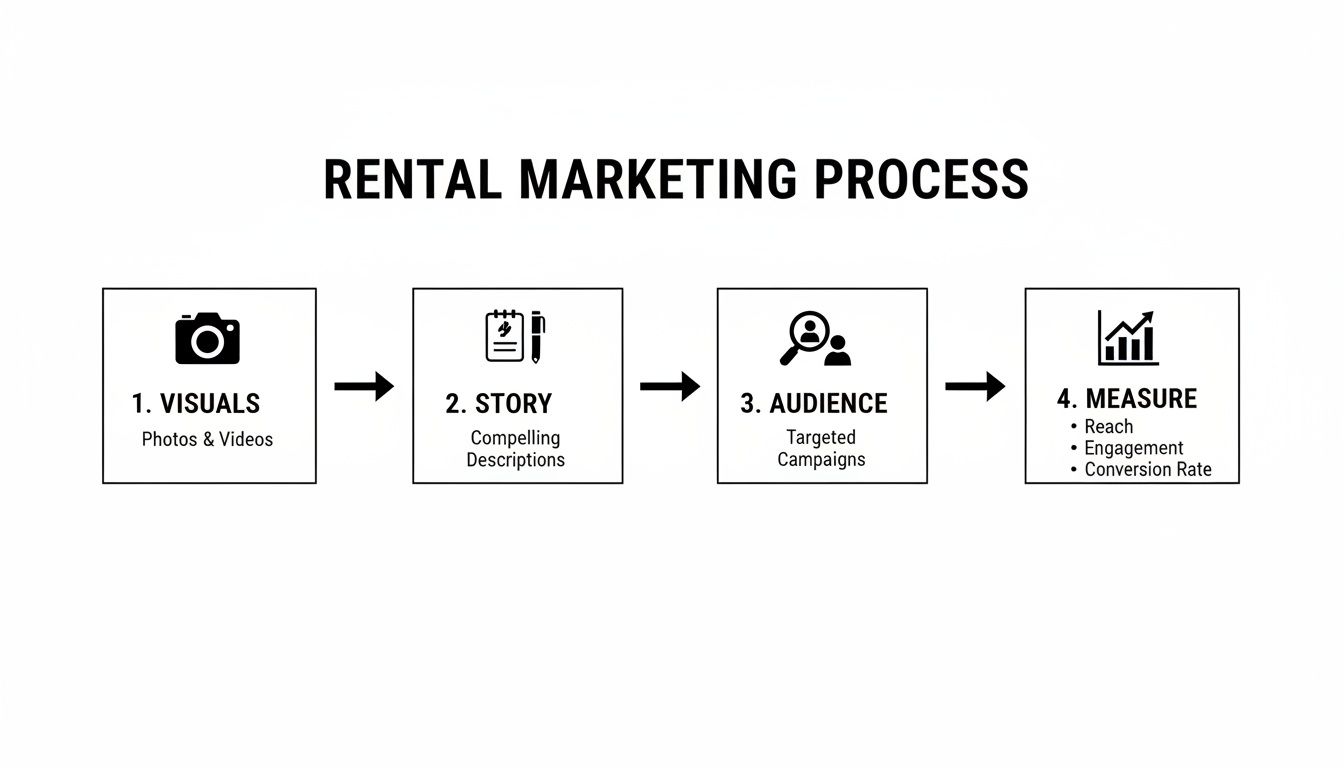
Think of it as a funnel. Each step builds on the one before it, creating a powerful system that attracts and converts the exact tenants you're looking for.
Understanding the Modern Renter
Let's be honest, the rental market is fiercely competitive. With a global housing shortage and sky-high home prices, demand for rentals is through the roof. In fact, over 80% of households in some developed economies now rent instead of buy. This creates a massive opportunity for landlords who know what they're doing.
To cut through the noise, your marketing has to connect with what renters actually care about. They're not just looking for a space; they're looking for a home. This means you need to highlight the things that truly matter, like your pet-friendly policy or the fact that you're just a short walk from the local coffee shop.
This same mindset applies whether you're leasing an apartment for a year or a vacation home for a weekend. If you're managing short-term rentals, you'll find great advice in this comprehensive guide to marketing vacation rentals.
And for those who want to zoom out and see the bigger picture, we've covered broader approaches you can learn from in our guide on the http://agentpulse.ai/blog/best-real-estate-marketing-strategies.
Here’s a quick overview of what this marketing playbook looks like in action.
Rental Marketing Playbook at a Glance
| Phase | Key Actions | Expected Outcome |
|---|---|---|
| Visuals | Professional photos, virtual tours, staging. | Grab attention and create an emotional connection. |
| Storytelling | Write compelling ad copy that sells the lifestyle. | Attract qualified tenants who see themselves in the space. |
| Audience | Use MLS, Zillow, social media, and paid ads. | Reach the right people on the platforms they use most. |
| Measurement | Track leads, cost per lead, and time on market. | Optimize your strategy to reduce vacancies and maximize profit. |
Following this framework gives you a clear path from listing to lease, helping you stay ahead in a competitive market.
Creating Visuals That Turn Browsers into Applicants
Your photos and videos are the digital handshake for your rental property. Long before a potential tenant reads your carefully crafted description, they’ve already formed a first impression based on your visuals. In a world of endless scrolling, great images and a compelling video aren't just a bonus—they're what stop a person in their tracks.
Think of it this way: your visuals do the heavy lifting. They have to forge an instant emotional connection, helping someone imagine themselves brewing coffee in the kitchen or unwinding on the balcony. Grainy, dark, or blurry photos scream neglect and will get even the most amazing properties scrolled right past.
Staging for Success on a Budget
Staging doesn’t mean you need to break the bank on a professional designer or rent a truck full of fancy furniture. The real goal is much simpler: make the space feel bright, clean, and inviting. You'd be amazed at how a few small tweaks can completely change how your property shows online.
Here are a few core principles for staging effectively without spending much:
- Declutter Everything: Get rid of personal photos, knick-knacks, and any extra furniture that makes a room feel small. You're selling the space itself, not your stuff.
- Let the Light In: Open every blind and curtain. Give the windows a good cleaning to maximize natural light. Always try to schedule your photoshoot for when the light is best, usually mid-morning or early afternoon.
- Add Simple, Fresh Touches: A new, crisp white shower curtain can instantly update a bathroom. A bowl of lemons on the kitchen counter adds a welcome pop of color. These little things signal that the property is loved and well-maintained.
If you really want to make your pictures pop, check out our guide on http://agentpulse.ai/blog/real-estate-photography-tips for more pro-level advice.
From Static Photos to Dynamic Video Tours
Professional photos are your foundation, but video is what truly brings a listing to life. A video tour gives people a real feel for the layout and flow of the home, which helps build trust and weeds out mismatched inquiries before you even schedule a showing.
Not too long ago, creating a professional-looking video was a huge, expensive headache. That’s just not true anymore. In today's rental market, dynamic visuals are proven to drive serious engagement. In fact, properties that use standout media have hit occupancy rates as high as 73% in some areas, blowing past the local average.
This is what I call the "Billboard Effect"—great marketing materials directly convert casual browsers into serious applicants. This is where modern tools can be a real game-changer for landlords and property managers.
This is exactly the problem platforms like AgentPulse were designed to solve. You can just upload your regular photos (JPG or PNG files), and its 3D-aware engine gets to work, analyzing the images to reconstruct the rooms. From there, it automatically creates a cinematic video with smooth pans, reveals, and professional-looking camera movements. The whole thing takes just minutes, transforming a basic photo gallery into an impressive video tour you can use on Zillow, social media, or anywhere else.
To take your visuals to the next level, you might also look into specialized real estate video editors that provide the tools to produce stunning virtual tours without needing a film crew.
Writing Listing Descriptions That Tell a Story
Your incredible photos and video tour got them to stop scrolling. Now, it's time for your words to seal the deal. A great listing description does so much more than state the number of bedrooms and bathrooms; it paints a vivid picture of what it’s like to live in the space. You're turning a property into a potential home.
Think of your listing copy as the story that brings your visuals to life. This is your opportunity to answer a renter’s questions before they even have to ask. What makes this apartment unique? Why is this neighborhood the place to be? You’re selling an experience, not just square footage.
Crafting a Headline That Hooks
The headline is, without a doubt, the most important part of your written listing. In a crowded market, it's your single best shot to grab a renter's attention and make them click. A generic title like "2 Bed, 2 Bath Apartment for Rent" is a surefire way to get lost in the noise.
The secret is to lead with your property’s single most desirable feature. Ask yourself: what's the one thing that will make my ideal tenant stop dead in their tracks and think, “That’s it. That’s the one.”?
Try one of these proven headline formulas:
- Highlight a Lifestyle Benefit: "Sunny & Quiet Top-Floor Apartment, Perfect for Remote Work"
- Focus on a Unique Feature: "Spacious 2-Bedroom with a Huge Fenced-In Yard for Your Dog"
- Emphasize Location: "Walk to Whole Foods & the Park from This Modern Downtown Loft"
Notice how these examples instantly connect with specific needs. The dog owner is clicking on that second headline every time, while the young professional who values convenience is drawn to the third. This approach starts filtering for qualified tenants right from the start.
Structuring Your Description for Impact
Once you’ve got their attention, the body of your description has to deliver. The last thing you want is a dense wall of text that’s impossible to read. Instead, you need to structure your copy in a way that guides the reader through the property’s story.
A great structure starts broad before narrowing down to the details, making it easy for people to scan and pull out the key information they’re looking for.
- The Opening Hook: Kick things off with a compelling one-sentence summary that captures the essence of the home. Something like: "Enjoy your morning coffee on the private balcony of this beautifully renovated apartment, tucked away on a quiet, tree-lined street."
- The Narrative: Next, write a short paragraph that describes the feeling of living there. Talk about the flow of the space, the natural light, or key features that make it feel special.
- The Bulleted Facts: Use a clean, bulleted list for the essential amenities and hard details. This is where you list things like in-unit laundry, stainless steel appliances, central air, or dedicated parking. It's all about scannability.
This framework lets you sell the dream while still providing the concrete facts every renter needs to make a decision.
A classic mistake is to just list features. Don’t just say "new kitchen." Instead, try "a brand-new kitchen with quartz countertops and all-new stainless steel appliances, perfect for hosting friends." You’re not just selling a feature; you’re selling what that feature makes possible.
Being Transparent and Building Trust
When you’re trying to market a rental property effectively, honesty is everything. You have to be upfront about all the costs. Trying to hide mandatory fees until the lease signing is a terrible practice that can lead to legal headaches. No one wants to dig through a 50-page lease to discover surprise charges for trash pickup or package services.
Transparency builds trust from day one and attracts the serious, high-quality applicants you actually want. Clearly state the monthly rent, the security deposit, and any other recurring monthly fees right in your listing. This simple step saves everyone time and starts the landlord-tenant relationship off on the right foot.
Choosing the Right Channels to Find Quality Tenants

Throwing your listing onto every website you can find isn't a strategy—it's a surefire way to get burned out and swamped with unqualified leads. Real success in marketing a rental property comes from a targeted, thoughtful approach. You need to figure out where your ideal tenants are actually looking and meet them there with a message that clicks.
It’s all about being selective. A luxury downtown condo needs a completely different marketing plan than a three-bedroom suburban home. By focusing your time and budget on the right platforms, you get a much better return on your effort.
Mastering the Major Listing Platforms
For any long-term rental, the big listing sites are your foundation. Think of platforms like Zillow, Apartments.com, and Realtor.com as the modern-day classifieds where nearly every renter starts their hunt. Being here isn't optional; it's essential.
These sites are powerful because they syndicate your listing across a huge network of partner sites, giving you massive reach from a single post. When you build your profile, remember that your photos and video are everything. A polished video tour can make you stand out instantly from the competition.
Things change if you're in the short-term or vacation rental game. Your focus will pivot to platforms like Airbnb, Vrbo, and Booking.com. Each one has its own vibe and audience:
- Airbnb: Tends to attract travelers looking for unique, local experiences. Properties with real personality and thoughtful amenities kill it here.
- Vrbo: Traditionally caters more to families and larger groups who want an entire home or condo for their trip.
- Booking.com: Has an enormous global footprint, often pulling in international travelers who are used to a more traditional hotel-style booking process.
The shift to online marketing for rentals is complete. Renters expect to book online and see high-quality visuals. In fact, data shows renters are increasingly searching for specific features like pet-friendly policies and energy-efficient appliances. While the big platforms are a must, diversifying is key to reaching everyone you can. You can learn more by exploring recent rental market trends.
Comparing Rental Marketing Channels
Choosing the right mix of platforms is critical. This table breaks down some of the most common options to help you decide where to focus your energy and budget.
| Channel | Audience Type | Cost Model | Best For |
|---|---|---|---|
| Zillow Rental Network | Broad-spectrum long-term renters | Pay-per-listing or free (varies by market) | Reaching the largest possible audience for standard residential rentals. |
| Airbnb / Vrbo | Travelers, vacationers, short-term tenants | Percentage of booking fee (commission) | Furnished properties, vacation homes, and unique stays. |
| Facebook Marketplace | Local, budget-conscious renters | Free | Finding local tenants quickly at no cost; great for single rooms or units. |
| Instagram / TikTok | Younger demographics, lifestyle-focused renters | Free (organic) or Pay-Per-Click (ads) | Building a brand, showcasing a lifestyle, and generating buzz with video. |
| Paid Search (Google Ads) | High-intent renters actively searching | Pay-Per-Click (PPC) | Driving immediate, qualified traffic for specific property types or areas. |
Ultimately, a multi-channel approach often works best. Start with the major listing sites, then layer in social media or paid ads to target your ideal renter more directly.
Tapping into Social Media and Paid Ads
Beyond the standard listing sites, social media is your chance to connect with potential tenants on a more personal level. This is where you move past a simple list of features and start selling the lifestyle your property offers.
Facebook Marketplace has become a surprisingly powerful—and often free—tool for finding local renters. You can post your listing directly and share it in local housing groups to reach a super-relevant audience.
Instagram and TikTok, on the other hand, are all about visual storytelling. A short, snappy video reel showing the morning light flooding the kitchen or the five-minute walk to a popular coffee shop can generate serious interest. One landlord I know filled a vacancy in just 48 hours with a simple "day in the life" Instagram Reel that cost absolutely nothing to make.
Pro Tip: Don't just post and walk away. Jump into the comments, answer questions, and engage with people. This not only builds trust but also tells the platform's algorithm that your post is worth showing to more people.
When you’re ready to pour some gas on the fire, paid social media ads can be a game-changer. With tools like Facebook Ads, you can target users with stunning precision—based on their location, age, interests, and even life events like getting married or starting a new job. This lets you put your property right in front of the people most likely to rent it, making every dollar in your marketing budget work harder. For more creative approaches, check out these powerful apartment leasing marketing ideas.
Smart Pricing and Promotions to Reduce Vacancy
An empty rental isn't just sitting there—it's actively costing you money. Every single day it sits vacant is a day of lost income you'll never get back. Getting your pricing right isn't a "set it and forget it" task; it's the most critical strategic move you can make to keep cash flowing. This has to be driven by data, not a gut feeling.
The whole game is about finding that perfect balance. You need a price that's compelling enough to get your phone ringing immediately, but not so low that you're leaving money on the table. Price it too high, and you're in for a long, expensive vacancy. Too low, and you'll get a firehose of applicants, many of whom won't be a good fit, while short-changing your investment.
Analyzing Your Local Market for the Right Price
Your property doesn't exist in a bubble. Its rental value is directly dictated by what similar places are going for right now, right in your neighborhood. So, that’s where the real work begins.
Jump on the major listing sites like Zillow and Apartments.com. Start filtering for properties that are a close match to yours—think same bedroom count, similar square footage, and comparable amenities.
But don't just look at the price tag. Pay attention to how long those other units have been on the market. If you see a comparable property that's been sitting there for 30+ days, that’s a huge red flag that they've overpriced it.
I recommend building a quick comparison chart to keep things straight. It's simple but incredibly effective.
- Property A (Direct Comp): 2 bed/2 bath, new kitchen, no parking. Rent: $2,200. On market for 8 days.
- Property B (Smaller): 2 bed/1 bath, older appliances, includes parking. Rent: $2,050. On market for 25 days.
- Your Property: 2 bed/2 bath, new kitchen, includes parking. Potential Rent: $2,250 - $2,300.
This kind of simple analysis gives you a realistic, data-backed range, helping you set a price that gets your property rented fast.
Using Promotions to Create Urgency
Once you've landed on a solid base rent, promotions are your secret weapon for closing a deal quickly, especially when the market is slow or you have a lot of competition. The trick is to offer incentives that feel like a big win for the tenant but don't actually cost you much.
Get creative and think beyond just knocking a few bucks off the rent. Smart concessions can make your listing stand out from another one, even if the monthly rent is exactly the same.
A lot of landlords make the mistake of seeing promotions as a desperate, last-ditch effort. I see it differently. Build them into your strategy from the get-go. A small, well-timed incentive can easily save you from an entire month of lost rent, which makes it a no-brainer investment.
Here are a few low-cost promotions that I've seen work wonders:
- Waived Application Fee: It’s a small amount of money, but it removes a psychological barrier and encourages more qualified people to apply.
- First Month's Wi-Fi on Us: You can partner with a local provider or just offer a simple rebate. The cost is a drop in the bucket compared to a vacant month.
- A Small Discount for a Longer Lease: Try offering $50 off per month for an 18-month lease instead of a standard 12-month one. This secures a great tenant for longer and reduces your turnover costs down the line.
Pricing With Transparency and Fairness
If you want to lose a great applicant in a hurry, surprise them with hidden fees. Today’s renters are incredibly savvy; they’ve seen it all and they expect total transparency. Advertising one price and then tacking on non-negotiable fees for trash, packages, or "amenity access" right before they sign the lease is a terrible practice.
It doesn't just destroy trust—it can get you into hot water legally. The Federal Trade Commission (FTC) has been cracking down on property management companies for these kinds of deceptive "junk fees."
Always, always disclose the total monthly cost right in your listing. Be upfront about rent plus any other mandatory charges. Being honest from the start accomplishes two things: it builds your reputation as a trustworthy landlord and it ensures the applicants you're talking to are actually prepared for the full cost. This simple act of respect saves everyone a ton of time and helps you land reliable tenants who feel valued from day one.
Measuring Your Marketing to See What Really Works
You can't improve what you don't measure. Pouring time and money into marketing your rental without tracking what happens is like driving with your eyes closed. You might get there eventually, but you’ll waste a lot of gas and probably cause some damage along the way. This is where we stop guessing and start knowing.
Marketing analytics sounds complicated, but it's not. It really just boils down to tracking a few key numbers that tell you exactly what’s working and what isn't. With a few data-driven tweaks, you can save money, cut down on stress, and fill your vacancies faster with better tenants.
The Only Metrics That Really Matter
Forget about drowning in spreadsheets or getting bogged down in marketing jargon. For a rental property, you only need to watch a handful of numbers that directly affect your wallet. These metrics tell a clear story, from the first eyeball on your ad to the signed lease.
Think of it like a funnel. You start with a big audience of potential renters and narrow it down to that one perfect applicant.
Here are the core numbers to keep an eye on:
- Listing Views: How many people actually see your ad? This is the top of your funnel. If this number is low, your main photo or headline isn't doing its job.
- Inquiries or Leads: Out of all those viewers, how many actually bothered to call, email, or send a message? This tells you if your description, photos, and price are hitting the mark.
- Showings Scheduled: How many qualified people booked a time to see the place? This is where you separate the tire-kickers from the truly interested.
- Applications Received: This is the finish line. Getting an application is the ultimate sign that your marketing worked.
When you track these simple numbers, you can instantly see where your process is breaking down. Low views? You need a better hook. Plenty of views but no inquiries? Your rent might be too high, or maybe your description is missing something important.
The real goal isn't just getting more leads; it's about getting better leads. The single most valuable piece of data you can have is knowing where your best applicants come from—whether it's Zillow, Facebook Marketplace, or a simple sign in the yard. That tells you exactly where to focus your energy next time around.
A Simple Way to Test and Improve Your Listings
Once you have your numbers, you can start making them better. The best way I’ve found to do this is with simple A/B testing. It sounds technical, but it just means trying two different versions of something to see which one gets better results. You don't need any special software, just a little patience.
Let's imagine your Zillow listing is getting tons of views but hardly any messages. You have a hunch your main photo is the culprit.
Here’s a quick test you can run:
- Get Your Baseline: For one full week, run your listing with the current main photo. Write down the number of views and inquiries. Let's say you get 500 views and only 4 inquiries.
- Change One Thing: The next week, change only the main photo. Swap that boring exterior shot for a bright, stunning picture of the new kitchen. Don't touch the headline or the description.
- Compare the Results: After another seven days, check your stats. If you now have 600 views and 12 inquiries, you've found a clear winner. That kitchen photo is obviously much better at turning lookers into leads.
You can use this exact same method for anything. Test one headline against another. Try a short, punchy description versus a longer, more detailed one. These little experiments give you hard proof of what renters in your market actually want, taking all the guesswork out of the equation. This is how you move from being a landlord to being a savvy marketer.
Your Top Rental Marketing Questions, Answered

Even the most seasoned landlords run into the same challenges. When you're in the thick of trying to fill a vacancy, questions always pop up. Here are my go-to answers for the hurdles I see most often.
Help! My Listing Isn't Getting Any Views
If your listing is a ghost town, your first impression is falling flat. It's almost always a problem with one of two things: your main photo or your headline.
Your primary image is your digital curb appeal. It has to be bright, clear, and make someone stop scrolling. Nine times out of ten, your best bet is a stellar shot of the kitchen or living room.
Then there's your headline. "2 Bed, 2 Bath" is a fact, not an invitation. It doesn't spark any emotion. Try swapping it for something that sells the experience, like "Sunny Top-Floor Apartment with Private Balcony." Small tweaks here can have an outsized impact on your click-through rate.
What Kind of Photos Do I Need for a Good Video Tour?
To make a compelling video tour, especially with an automated tool, you need variety. Simply using wide shots of every room will result in a boring, static video.
For a dynamic video that truly shows off the space, you’ll want a mix of shots:
- The Staples: A clear, wide shot of each main room (living area, kitchen, bedrooms).
- The Details: Close-ups of the things that make your property stand out. Think new appliances, a cool light fixture, or that sleek bathroom tile you just installed.
- The Big Picture: Don’t forget the building’s exterior, the view from the balcony, or a great photo of the community pool.
A classic mistake is just standing in the corner of each room and snapping a picture. To create a video that feels professionally produced, you need different angles and focal points. This gives video creation tools the raw material they need to build a more cinematic and engaging tour.
This mix allows the software to piece together a story, creating a video with better pacing and flow.
I Have Too Many Applications—What Now?
A flood of applications sounds like a champagne problem, but it can quickly become a logistical nightmare. The secret is to have a consistent, fair, and documented screening process ready to go before you even post the listing.
Start by pre-screening right in your ad copy. Clearly state your non-negotiable criteria upfront, like income requirements (3x rent is a common standard) or your no-smoking policy. This simple step helps weed out unqualified applicants from the very beginning, saving everyone time.
Ready to turn your standard property photos into captivating video tours that stop the scroll? With AgentPulse, you can create polished, cinematic videos in just a few minutes. It's the easiest way to attract more high-quality applicants without ever needing to hire a video editor.