Creating a viral real estate video is your secret weapon for stopping the scroll and grabbing a buyer's attention. Let's face it, in a world dominated by TikTok and Instagram Reels, a slideshow of static photos just doesn't make the same impact anymore.
Why Your Photos Are Falling Short in Today's Market
Think about your own scrolling habits. Flat, lifeless images get a split-second glance before you move on. The same thing is happening to your listings. If you're relying solely on traditional photos, you're missing out on serious engagement and, more importantly, qualified leads.
The shift to video isn't just a fleeting trend. It’s a fundamental change in how people connect with properties online. Video builds an emotional bridge that photos simply can't. It lets a potential buyer actually feel what it's like to live in a home—to walk through the front door, imagine cooking in the kitchen, or picture a lazy Sunday in the backyard.
This immersive experience turns a standard listing into a story people want to be a part of. A smart video strategy is one of the most powerful tools you have to drum up more interest and get that deal closed faster.
Let's quickly look at how these two formats stack up.
Static Photos vs Viral Real Estate Videos at a Glance
This table breaks down the real-world impact of sticking with old-school photos versus embracing dynamic video content.
| Marketing Metric | Static Photos | Dynamic Video |
|---|---|---|
| Buyer Engagement | Passive scrolling, quick glances | Active viewing, higher time-on-page |
| Emotional Impact | Shows a space | Evokes a lifestyle and feeling |
| Lead Generation | Standard inquiry rates | Up to 403% more inquiries |
| Social Media Reach | Lower priority in algorithms | Higher priority, greater viral potential |
| Storytelling | Limited, relies on captions | Immersive, tells a compelling story |
As you can see, the difference isn't just small—it's a game-changer for your marketing effectiveness.
The Power of Emotional Connection
A great photo shows what a room looks like. A cinematic video shows what it feels like to be there. That’s the key difference.
When you transform your existing listing photos into a moving, dynamic video, you're tapping directly into the viewer's imagination. You're no longer just selling a structure; you're selling a future, a lifestyle, and that unmistakable feeling of home. For more on capturing that perfect shot, check out our guide on real estate photography tips.
This emotional pull delivers real, measurable results. One of the most telling stats in our industry proves it: listings with video get an incredible 403% more inquiries than listings that only use photos.
The goal is to make viewers feel like they’ve already stepped inside. When they can picture their life unfolding in the space, they're no longer just a lead; they're an emotionally invested buyer.
From Passive Viewing to Active Engagement
Think about the difference between scanning and watching. Photos get scanned. Videos get watched. That simple change in behavior means people spend significantly more time with your listing, absorbing all the little details that make a property special. They're far more likely to take that next step and reach out.
And here’s the best part: you don't need a Hollywood film crew or a massive budget to make it happen. Modern tools can easily turn your professional photos into a cinematic experience that looks and feels premium. It’s the perfect blend—the crisp detail of high-quality photography combined with the captivating power of video.
Crafting Your Video's Blueprint Before You Record
Making a real estate video that actually gets noticed isn't about luck. It's all about what you do before you even open your video editor. This is where you lay the groundwork, turning a folder of nice listing photos into a story that grabs a buyer's attention and won't let go.
Think of it this way: jumping straight into video creation is like trying to build a house without a blueprint. You might get something standing, but it won't be the polished, scroll-stopping video you need. A little bit of planning upfront saves you a ton of headaches later and makes the final product so much better.
Selecting Your "Hero" Images
Your video is only as good as the photos you put into it. The first thing you need to do is go through your listing photos and pick out the absolute best of the best. Be ruthless. Don't just dump the whole gallery in there. You're looking for the shots with perfect lighting, interesting angles, and those unique details that really show off the home's personality.
Here’s what I look for when I’m choosing photos for a video:
- The Wow Factor: You need a killer opening shot. This is your hook. It could be a stunning twilight exterior, a grand two-story entryway, or a view that takes your breath away.
- Emotional Triggers: Find photos that make you feel something. A cozy fireplace on a rainy day, a sun-drenched breakfast nook, a perfectly manicured backyard—these are the images that help people start picturing their life in that home.
- Highlight the Best Features: Zero in on the money shots. Is it the brand-new chef's kitchen? The spa-like master bathroom? The massive back deck perfect for entertaining? Put those front and center.
The whole goal here is to feed the modern marketing funnel. It's a pretty straightforward process: great photos become a great video, and a great video brings in the leads.
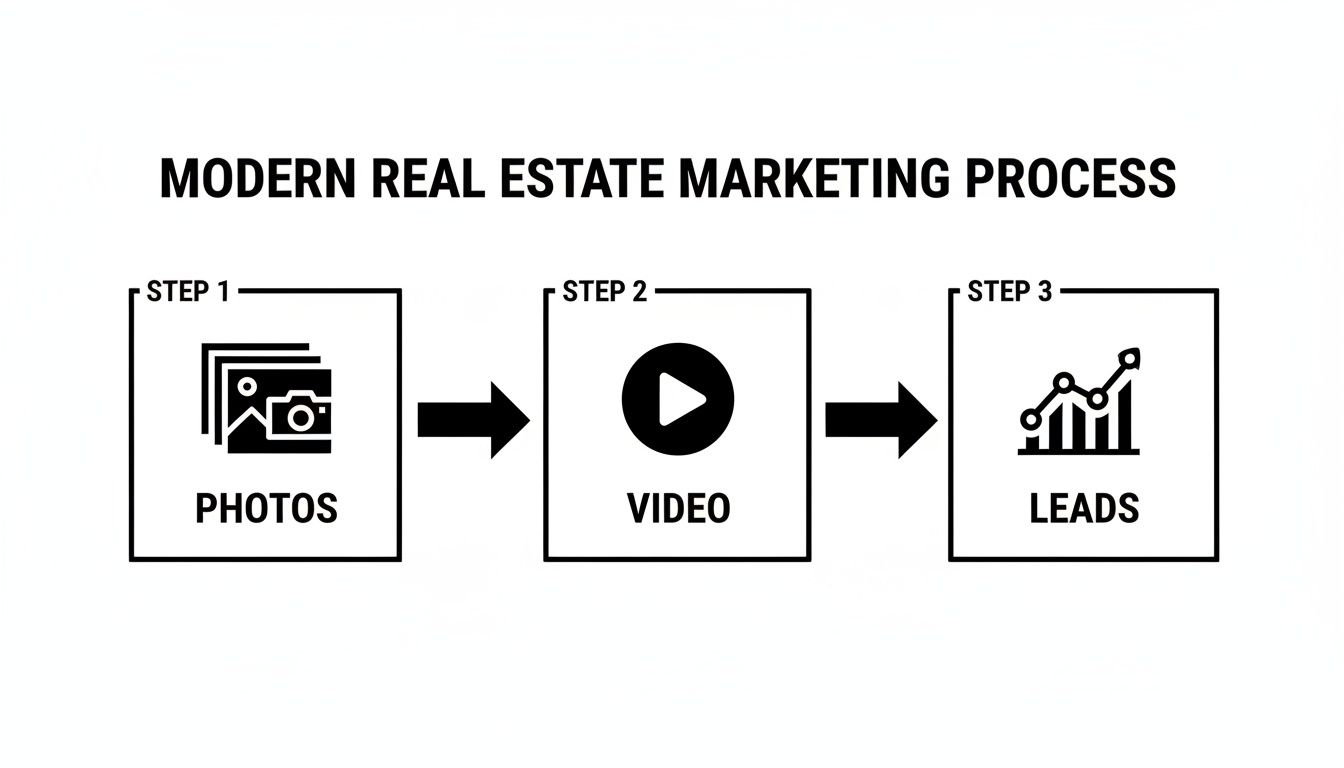
This simple graphic nails it. Turning your amazing photos into an engaging video is that critical middle step to getting more people to raise their hands.
Structuring Your Video's Narrative Flow
Once you've got your "hero" images, the next step is to arrange them in an order that makes sense. You want to create a virtual walkthrough, not just a random jumble of pictures. A logical flow guides the viewer through the home, making them feel like they're actually there.
I've found a sequence that works really well time and time again:
- Exterior Curb Appeal: Kick things off with your best exterior shot to set the stage.
- Entry and Main Living Areas: Next, bring them inside. Move from the entryway into the living room and family room.
- The Heart of the Home: This is where you show off the kitchen and dining spaces.
- Private Quarters: From there, transition to the master suite, then the other bedrooms and baths.
- Bonus Features: Got a cool home office, a gym, or a finished basement? Show it off now.
- The Grand Finale: Always end on a high note. Your best outdoor feature—the pool, patio, or that incredible view—leaves a lasting impression.
By structuring your video like a guided tour, you create a sense of discovery and flow. This makes the experience more immersive and helps viewers mentally "move in," which is a powerful step toward them making an inquiry.
This natural progression helps potential buyers understand the layout and feel of the home before they ever step through the door. It’s this thoughtful sequencing that turns a simple slideshow into a powerful marketing tool. With this blueprint in hand, you're ready to bring your vision to life.
From Still Photos to Cinematic Showcase
You've picked out your best shots and have a story in mind. Now for the fun part: turning that groundwork into a polished video that grabs attention and doesn't let go. And thanks to some incredible new tools, this is way faster and easier than you'd think.
We’re not just making a slideshow here. The goal is a cinematic experience. The secret is adding subtle, professional-looking motion to your static images, making them feel like they were shot by a camera crew on a dolly track. This is where AI really steps up.
Making Your Images Move with AI
Platforms like AgentPulse use a smart, 3D-aware engine that actually analyzes each photo you upload. It figures out the room's dimensions, pinpoints focal points like a beautiful window or a unique architectural detail, and then plots out smooth, dynamic camera movements all on its own.
This isn't random movement. It’s an intelligent process that creates effects mimicking high-end videography:
- Parallax Pans: This is that cool effect where the foreground and background seem to move at different speeds. It adds a ton of depth and makes a flat photo feel three-dimensional.
- Dolly-Ins: Imagine a slow, steady push toward a standout feature, like that gorgeous kitchen island or the cozy fireplace. It pulls the viewer right into the space.
- Reveal Shots: Here, the virtual camera pans around an object to reveal another part of the room, creating a sense of discovery and making the tour feel more natural.
These automated movements are what separate a basic photo montage from a compelling videos viral real estate video. It’s this touch of Hollywood magic that keeps eyes glued to the screen.
The Finishing Touches: Music and Text
Music is the soul of your video. It sets the tone and builds an emotional bridge with the viewer. The right track can make a property feel energetic, luxurious, or peaceful. An upbeat, modern track is perfect for a chic city loft, while a calm, ambient score would better suit a quiet suburban home with a garden.
Pro Tip: Always use royalty-free music from a reliable library. If you use a popular song you don't have the rights to, social media platforms can mute your audio or take the video down entirely. Don't let all your hard work go to waste.
Text overlays are your secret weapon for getting key information across. Use them strategically—don't clutter the screen—to highlight things a viewer might otherwise miss.
A few well-placed text callouts can work wonders:
- The property address or neighborhood name.
- Key features like "Newly Renovated Kitchen" or "Private Backyard Oasis."
- A clear call to action, like "Schedule Your Tour Today" with your contact info.
This is critical when you remember that 85% of social media users watch videos with the sound off. Text ensures your message still lands. If you're curious about the tech behind this, we've broken down the best AI video creation tools in another guide.
Format for Every Feed
Before you export that final video, stop and think about where it's going to be seen. A one-size-fits-all approach is a recipe for low engagement. A video for the MLS needs a different shape than one for Instagram Reels.
- Landscape (16:9): The classic. This is your go-to for YouTube, your website, and most MLS listings. It’s perfect for capturing wide, expansive rooms.
- Vertical (9:16): Absolutely essential for Instagram Reels, TikTok, and Stories. This format fills the entire phone screen, creating an immersive experience that algorithms love.
- Square (1:1): This is a solid, versatile choice for the main feeds on Instagram and Facebook. It’s a safe bet that looks good on almost any device without getting awkwardly cropped.
Choosing the right format from the get-go ensures your video looks its best everywhere you post it, giving it every opportunity to connect with buyers and take off.
Optimizing Your Video for Maximum Social Reach
Alright, you've created a fantastic video. That's the first big win, but the job is only half-done. Now, you have to make sure people actually see it.
Without a smart distribution strategy, even the most beautiful cinematic tour will get buried in the endless scroll of social media. This is where you switch gears from being a video creator to a sharp marketer. Your main goal is to feed the social media algorithms exactly what they want so they show your video to the right audience.
Writing Captions That Connect
Think of your caption as the friendly greeting at the door—it sets the tone. A lazy "Just Listed: 123 Main St." is a missed opportunity. You need to write something that stops the scroll and invites people in.
A great way to do this is by asking a question. Instead of listing features, try something like, "We can't decide if the chef's kitchen or the backyard oasis is our favorite part of this home. Which one would you choose?" See the difference? You've just turned a passive announcement into a conversation starter.
Think of your caption as the opening line of a conversation. It should invite a response, not just state a fact. The more comments and shares you get in the first hour, the more the algorithm will show your video to a wider audience.
Tell a little story. Maybe it's the perfect spot for summer barbecues, or it has a quirky bit of local history. Adding a touch of personality helps build an emotional connection that a simple list of amenities just can't match.
A Hashtag Strategy That Actually Works
Hashtags are how new people discover your content. A huge mistake I see agents make is only using generic tags like #realestate. While you should include one or two of those, a layered approach will get you much better results for creating a videos viral real estate video.
Break your hashtag strategy into three tiers:
- Broad Industry Tags: These are your high-level, popular tags like
#realtorlife,#dreamhome, or#propertytour. Only use 2-3 of these. - Local and Niche Tags: This is your sweet spot. Get specific with tags like
#bostonrealestate,#downtowncondo, or#chicagohomesforsale. This is how you reach people actively looking in your area. Aim for 5-7 of these. - Property-Specific Tags: Describe what makes the home unique. Think
#homewithpool,#modernkitchen, or#historichome. Use 3-5 of these to attract buyers looking for specific features.
This mix helps your video show up everywhere, from general real estate feeds to the highly specific searches of serious buyers.
Nail the First Impression
On nearly every platform, people see two things before they decide whether to watch: the thumbnail and any on-screen text.
The Thumbnail: This is your video's book cover—it has to be compelling. Always choose a striking frame, like the home's "hero" exterior shot or its most jaw-dropping interior feature. A blurry or boring thumbnail is an instant scroll-past.
On-Screen Text: Remember, a huge number of people watch videos on mute. Your very first shot needs a bold text hook that grabs them immediately. Something like "You Won't Believe This View" or "The Perfect Family Home?" ensures your message lands, even with the sound off.
To really make your video pop, it helps to understand what makes any piece of content shareable. It's a bit of a science, and you can learn how to create viral content that people genuinely want to pass along. For a deeper dive into this topic, we've also put together an article on what makes a video go viral.
Your Pre-Launch Checklist: Getting It Live the Right Way
You’ve done the hard work. The video is edited, polished, and ready for its debut. But don't just hit "publish" and hope for the best. A smart launch strategy is what separates a video that gets a few dozen views from one that actually drives leads.
Let's walk through the final steps to give your video the powerful launch it deserves.

This isn’t just about getting it out there; it’s about making an impact right from the start.
Master the First Hour
This is critical. The first 60 minutes after your video goes live can make or break its reach. Social media algorithms are watching closely. They use early engagement—likes, comments, shares—to decide if your content is worth showing to more people. This is your golden window to create some momentum.
As soon as you post, be ready to jump on every single comment. A quick reply not only makes you look engaged but also instantly doubles the comment count on your post. This little trick signals to the algorithm that your video is sparking a real conversation, which can give its initial reach a serious boost.
The "first-hour rule" is your secret weapon. Be present and interactive right away to signal value to the platforms. This initial flurry of activity is often the catalyst that helps a great video become a truly videos viral real estate video.
Nail Your Timing and Give It a Nudge
Posting when people are actually scrolling is half the battle. While this can vary, I’ve found that peak times are usually weekdays during lunch (12-2 PM) and right after work (6-9 PM). Test a few different times to see when your specific audience is most active and engaged.
Now, let's talk about paid promotion. You don’t need a huge ad budget here; even a small boost of $20-$50 can work wonders. Use the platform’s ad tools to create a highly targeted local audience. Think people in your specific city who have recently shown interest in sites like Zillow or Realtor.com.
This targeted spend does two things for you:
- It forces your video in front of a relevant, local audience that is likely to be interested.
- It helps generate that crucial first wave of engagement that tells the algorithm your content is a winner.
Don't Forget Your Other Channels
Your video shouldn't just live on one social media platform. To get the most out of your efforts, you need to push it out across every channel you own. Think of it as creating a web of touchpoints for potential buyers.
Before you call it a day, make sure you’ve covered these bases:
- Email Your Database: Your email list is gold. Send the video directly to past clients and current leads. Emails with a video thumbnail get way more clicks.
- Embed it on the MLS Listing: This is a non-negotiable. Serious buyers and their agents live on the MLS. Putting the video tour right there gives them the immersive experience they're craving.
- Add it to Your Website: Feature the video prominently on your homepage or the property’s dedicated listing page. It’s a fantastic way to grab a visitor’s attention.
- Share Across All Socials: Post the video natively to each platform—Instagram, Facebook, TikTok, even LinkedIn. And don’t forget to use Stories for that extra, time-sensitive visibility.
By hitting all these channels, you ensure your video is working as hard as possible to attract buyers and build your brand.
Let's Tackle Your Biggest Real Estate Video Questions
Jumping into video can feel a little daunting. I get it. Most agents I talk to have the same handful of questions pop up before they feel ready to hit 'record' (or in this case, 'create'). Let's clear up those common hesitations so you can get started with confidence.
"Do I Really Need Professional Photos to Make a Good Video?"
Look, professional photos are always the gold standard. They’ll give you the cleanest, most impressive source material to work with. But let's be realistic—sometimes you don't have them.
The good news? The camera in your pocket is probably more powerful than you think. What matters most isn't the camera, but how you use it. Good lighting and a steady hand are non-negotiable. A bright, crisp, and compelling photo is the only raw ingredient you truly need to create a video that looks polished and cinematic.
Remember, AI-powered video tools are enhancers, not magicians. They work best when they have great material to start with. So, whether it's from a pro photographer or your own phone, focus on getting the best possible shot.
The old saying "garbage in, garbage out" absolutely applies here. Start with sharp, well-lit photos, and you'll give your video a fighting chance to look premium.
"What’s the Perfect Length for a Listing Video?"
This is a big one. For social media, especially platforms like Instagram Reels and TikTok, forget about long, drawn-out tours. You need to think like a movie trailer editor.
The sweet spot is somewhere between 15 and 45 seconds. That's just enough time to hit the highlights—the stunning kitchen, the backyard oasis, the gorgeous primary suite—without your viewer's thumb getting twitchy. Your goal is a quick, punchy, highlight reel that leaves them wanting more.
Here's why this works: social media algorithms are obsessed with completion rates. A shorter, high-energy video is far more likely to be watched from start to finish. When that happens, the platform sees it as quality content and pushes it out to a much wider audience. This is one of the secrets to creating a true viral real estate video.
"Can I Just Use That Trending Song I Heard on TikTok?"
Tempting, I know. But using popular or copyrighted music in your marketing is a huge gamble, especially from a business account. It's a fast track to getting your audio muted or, even worse, your video taken down for copyright infringement. It just isn't worth the risk.
The smart and professional move is to stick with royalty-free music. You don't have to go digging for it, either. Most modern video creation tools, including AgentPulse, have built-in libraries of licensed music that are cleared for commercial use. This way, you get a great soundtrack without the legal headaches.
Ready to see how easy this can be? AgentPulse uses AI to instantly turn your static listing photos into a scroll-stopping video tour with cinematic motion. No editing skills required. Start creating for free at agentpulse.ai and watch your listings come to life.