Let's be honest, static photos just don't cut it anymore. A real estate listing video takes those same photos and turns them into a dynamic walkthrough, giving buyers a real feel for the property in a way a slideshow never could. It's about creating a connection and telling a story that makes someone feel like they're already home.
Why Video Is Now a Must-Have for Real Estate Listings
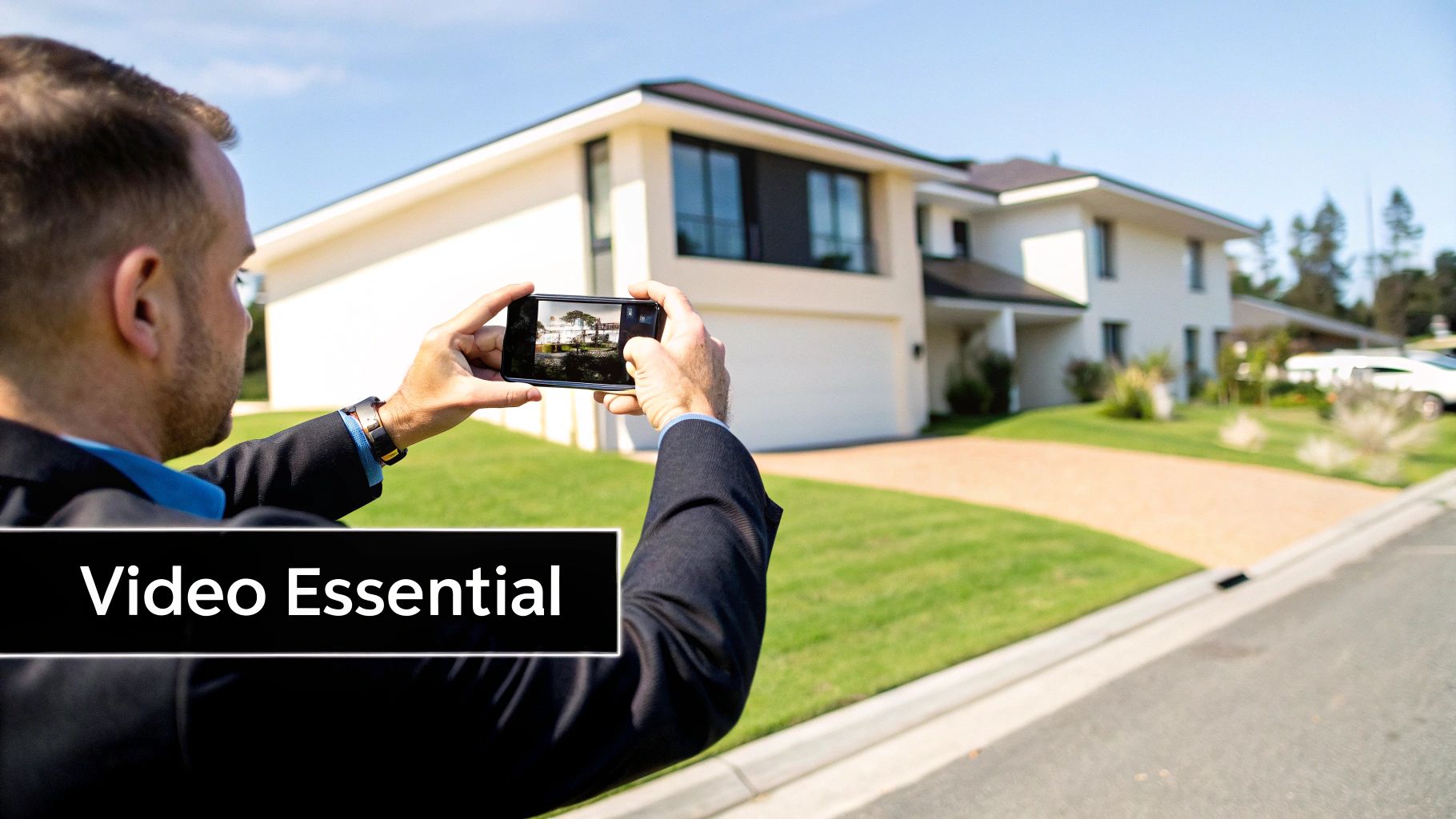
In a sea of online listings, you have seconds to grab a buyer's attention. Think about it: today's buyers, especially the millennials and Gen Z flooding the market, live on their phones. They scroll fast and expect to be wowed.
A great video isn't just about showing rooms; it's about showing the flow of a home. It guides a potential buyer from the front door through the living space and out to the backyard, creating a sense of dimension and space that photos alone can't replicate. And this isn't just for luxury mansions anymore. It's becoming the standard expectation for listings at every price point.
The Real-World Impact on Buyer Engagement
The numbers don't lie. Listings that feature real estate listing videos get way more than just extra clicks—they attract buyers who are genuinely interested. In fact, property listings with a video can pull in a mind-blowing 403% more inquiries compared to listings with only photos.
Why such a massive jump? Because video lets buyers pre-qualify a property from their couch. They can see if the layout works for them, saving everyone a ton of time.
This boost in engagement leads to some serious results:
- Homes Sell Faster: When you generate more buzz right from the start, you get more serious buyers through the door sooner.
- Better Offers: A polished, professional video makes the property look its best, which often leads to a higher perceived value and stronger offers.
- You Look Like a Pro: When you consistently use high-quality video, it tells sellers you're a modern agent who invests in top-tier marketing for your clients.
Video Production Isn't What It Used to Be
Not long ago, creating a listing video meant hiring a pricey videographer for a full-day shoot and waiting forever for the final cut. The cost—anywhere from $500 to over $5,000—was a non-starter for the average listing. It was a huge barrier for agents who knew they needed video but couldn't justify the expense.
The old model of expensive, time-consuming video production is broken. Today's AI-powered tools empower any agent to create a cinematic listing video in minutes, not days, using the photos they already have.
This is a complete game-changer. With new photo-to-video technology, you can create polished, scroll-stopping real estate listing videos without needing any filming gear or editing skills. You just upload the high-res photos you already paid for, and the software generates a professional video with smooth, realistic camera movements.
This gives you a huge advantage, allowing you to bring powerful video marketing to every single listing, no matter the budget. To dive deeper, check out this detailed guide to video marketing for real estate agents. This isn't a gimmick; it's a fundamental tool you need to succeed.
Building a Narrative with Your Photo Gallery
Think of yourself as a film director for a moment. Your photo gallery? That's your storyboard. Before any fancy software adds motion and music, your first job is to tell the story of the home. This isn't just about showing off rooms; it's about taking potential buyers on a journey that makes them feel like they could actually live there.
The order of your photos is everything. It sets the entire flow and feeling of your video tour. A random jumble of images will just feel confusing and unprofessional. But a logical, well-thought-out sequence? That feels like a warm, inviting walkthrough, building excitement with every single frame.
Starting with a Strong First Impression
Every great story needs a killer opening scene. For a house, that's almost always the exterior. The very first image in your sequence should be a powerful "hero shot" of the front of the home. If you can snag it during the golden hour, even better—that warm glow is incredibly welcoming.
This first shot does more than just show the building; it establishes that all-important curb appeal and sets the tone for everything else. It’s the digital handshake that invites people inside. After that main shot, you can add a couple more exterior photos to highlight a beautiful garden, a unique architectural detail, or an inviting front porch.
Of course, before you turn any photo into a video, the image itself has to be fantastic. For a deeper dive, these Real Estate Photography Tips are a great place to start. Remember, the quality of your final video is completely dependent on the quality of the photos you start with.
Crafting a Logical Flow Through the Home
Once you’ve hooked them with the outside, you need to guide them through the interior in a way that just makes sense. The goal is to copy the path someone would naturally take if they were walking through the house in person. A chaotic sequence can leave a buyer feeling totally lost.
A simple, logical path works best:
- The Entryway: Start by moving from the exterior right through the front door and into the foyer. This is the home's first "hello."
- Main Living Areas: From there, flow naturally into the main social hubs—the living room, family room, and dining area.
- The Kitchen: This is the heart of the home and a huge selling point. It deserves several of your best photos. Show off the countertops, appliances, and any special features.
- The Primary Suite: After the main living spaces, take viewers to the owner's private retreat. This means showing the primary bedroom, any walk-in closets, and the en-suite bathroom.
- Secondary Rooms: Next up are the other bedrooms, bathrooms, and bonus spaces like a home office, gym, or playroom.
- Outdoor Living Spaces: End the tour by heading out back to the patio, yard, or pool area. Finishing here leaves buyers with a lasting impression of the lifestyle they could have.
A well-sequenced photo gallery doesn't just display a property; it builds a narrative. It allows a potential buyer to mentally "walk through" the home, connecting with the space on a deeper, more personal level.
Selecting the Perfect Shot for Each Room
Even within this logical sequence, choosing the right photo for each space is critical. You might have five great shots of the living room, but only one or two should make the final cut for your video. You have to prioritize clarity, light, and a bit of emotion.
For each room, pick the one absolute best image that:
- Is perfectly sharp and in focus. Nothing screams amateur like a blurry photo. It cheapens the entire presentation.
- Is bright and well-lit. Dark, moody photos make rooms feel small and depressing. Always go for images with great natural light.
- Showcases the room's best angle. Find a shot that makes the space feel as large and open as possible. Taking it from a corner usually does the trick.
- Highlights a key selling feature. Does the living room have a gorgeous fireplace? Does the kitchen have a massive island? Make that feature the star.
When you carefully curate and sequence your photos this way, you're building a powerful foundation. This thoughtful narrative is what turns a simple slideshow into a compelling real estate listing video that truly captures attention and gets people to call.
Turning Still Photos Into a Cinematic Tour
This is where the magic really happens. You’ve picked your best shots and put them in an order that tells a great story. Now it's time to bring those static images to life with motion. Thanks to some incredible AI tools out there, you can turn a simple folder of photos into professional-grade real estate listing videos in just a few minutes.
The process is refreshingly simple. You just upload your high-resolution JPG or PNG files—no clunky software to install or technical skills needed. Once they're in the system, the AI takes over, doing a surprisingly sophisticated analysis of each image.
How AI Creates Realistic Camera Movements
This isn't your average slideshow with a cheesy Ken Burns effect. The technology today is much smarter. It uses a 3D-aware engine to actually "read" the visual data in each photo, figuring out the geometry of the room. It identifies walls, windows, furniture, and focal points to get a real sense of the space's depth.
With that understanding, the AI plans out a series of smooth, cinematic camera movements that feel incredibly natural. These aren't just random zooms; they’re calculated to look like a professional videographer is physically moving a camera through the home.
You'll see dynamic shots like:
- Gentle Dolly-Ins: A slow push toward a key feature, like a gorgeous fireplace or a waterfall kitchen island, that really draws the viewer in.
- Smooth Pans: A sweeping horizontal motion across a room to show off its true size and scale.
- Subtle Parallax Effects: This creates a real sense of depth by moving the foreground and background at slightly different speeds.
The best part? It’s all automated. What used to take a skilled videographer and editor days of work can now be done in the time it takes to grab a coffee. This speed is a game-changer, letting you get your listings live and in front of buyers faster than ever.
This simple flow chart shows how that photo narrative you built becomes the blueprint for a compelling video tour.
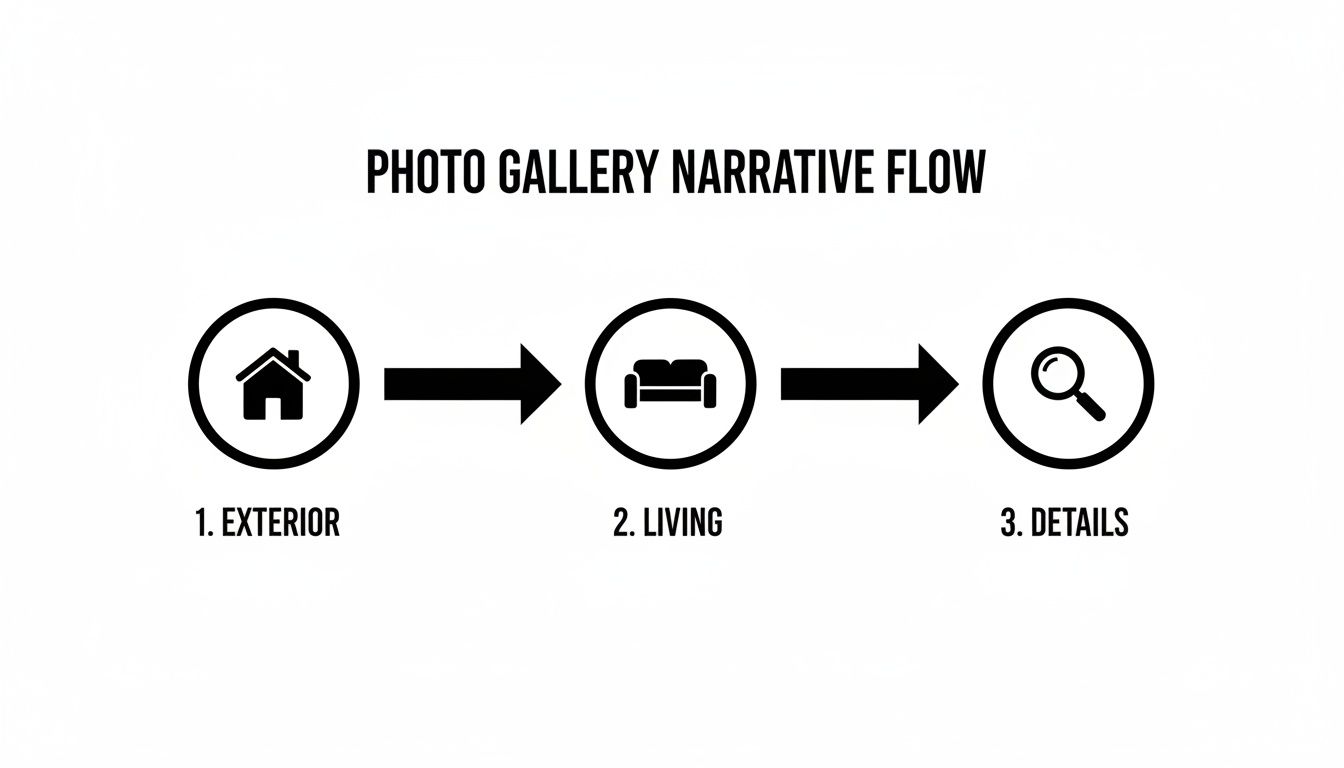
Starting with a strong exterior shot, moving into the main living areas, and then highlighting unique details gives the AI a logical path to follow, resulting in a much more engaging video.
Optimizing Your Video for the Best Results
While the AI handles the heavy lifting, you're still in the driver's seat. Remember, the quality of your video is directly tied to the quality of your photos. Always, always use the highest resolution images your photographer provides. Low-res or blurry photos will only lead to a pixelated, unprofessional-looking video.
After the AI generates the first draft, you get to play director. You can easily reorder scenes to perfect the flow. Maybe you decide the kitchen should lead right into the dining room instead of the primary bedroom. A simple drag-and-drop is all it takes to make those tweaks on the fly.
The goal is to create an experience, not just a presentation. When you refine the sequence so that each transition feels natural, you’re turning a collection of photos into a virtual walkthrough that helps buyers truly connect with the property on an emotional level.
Choosing the Right Aspect Ratio for Every Platform
One of the most important finishing touches is picking the right aspect ratio for your video. Different platforms are built for different formats, and getting this right ensures your video looks its best and grabs the most attention.
This table breaks down the essentials, helping you pick the right format for maximum impact across all your marketing channels.
| Aspect Ratio | Best For | Why It Works |
|---|---|---|
| 16:9 | YouTube, Zillow, MLS, Websites | The classic widescreen format that looks professional and expansive on TVs and desktops. |
| 9:16 | Instagram Reels, TikTok, Stories | Fills the entire phone screen, creating an immersive, "can't-miss-it" experience. |
| 1:1 | Instagram & Facebook Feeds | A versatile square format that performs consistently well in social media news feeds. |
Picking the right format ensures your video isn't awkwardly cropped or surrounded by black bars, making your listing look polished no matter where a potential buyer finds it.
The good news is you don't have to create three separate videos from scratch. Most modern photo-to-video tools let you export your final video in all three formats from a single project. This approach lets you learn more about how to effectively convert photos into engaging videos while tailoring your content for every potential buyer, wherever they might be scrolling.
Adding the Final Polish with Music and Text
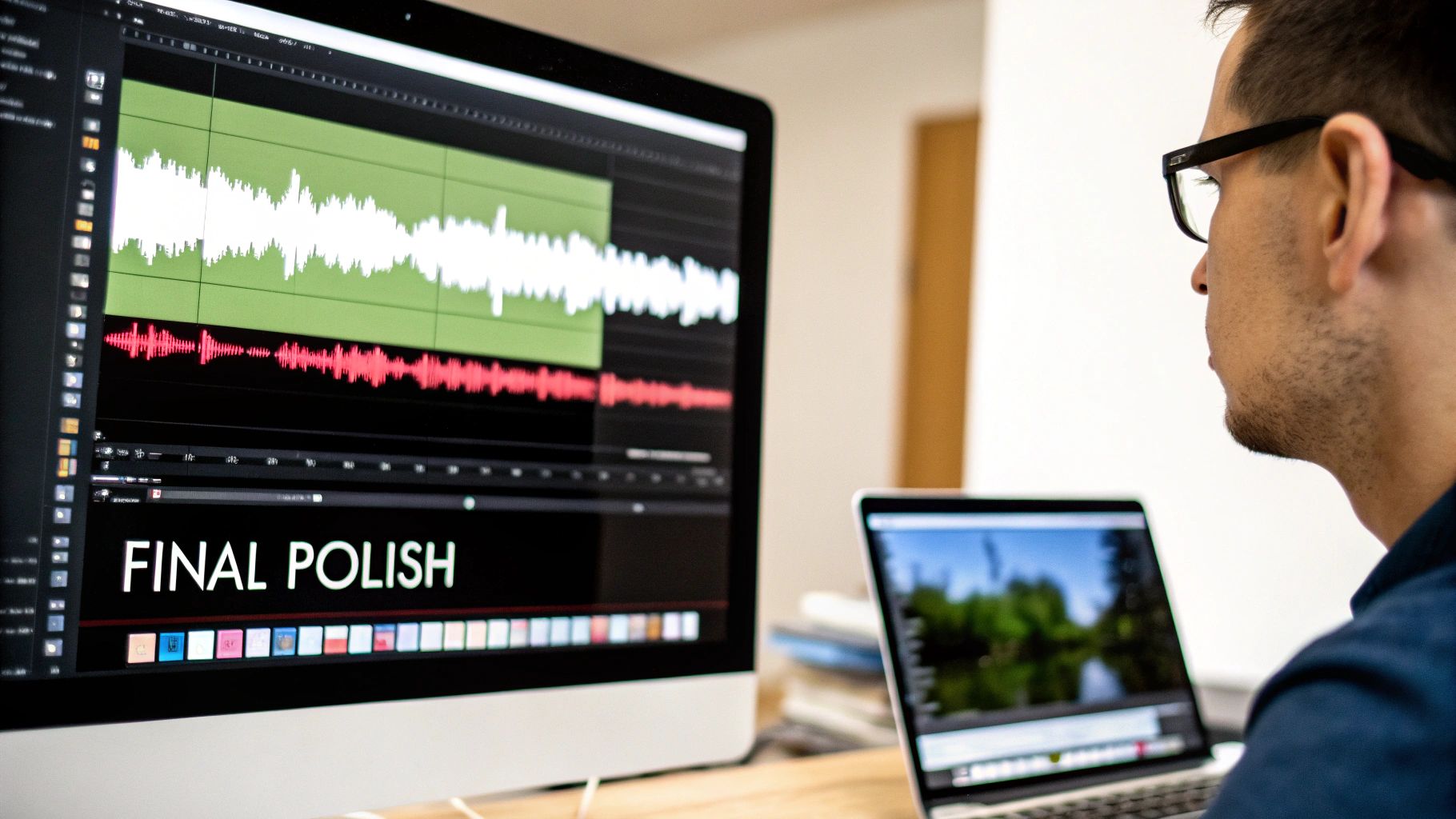
So, you've planned your shots and let the AI work its magic to create a cinematic tour. The visuals look great, but we're not quite at the finish line. The final touches—the right music and the right text—are what separate a decent video from a powerful sales tool that actually connects with buyers.
These last two elements are all about creating a vibe and telling viewers exactly what to do next. Get them wrong, and even the most beautiful real estate listing videos can feel like a silent, uninspired slideshow. This is your chance to set the mood and drive action.
Choosing Music That Matches the Property Vibe
Music is the emotional core of your video. Seriously. The right track can instantly make a home feel exciting, serene, luxurious, or cozy. The wrong one is just distracting and can give a completely false impression. The goal is to find a soundtrack that really captures the home's personality and the lifestyle it offers.
What's the story you're telling? A sleek downtown loft with exposed brick walls probably calls for something modern and energetic. On the other hand, a sprawling suburban home with a big backyard needs a calmer, more optimistic, or even orchestral piece to feel right.
To nail it down, think in terms of property archetypes:
- Modern Urban Condo: Go for electronic, lo-fi, or indie pop tracks.
- Cozy Family Home: Try acoustic folk, light classical, or warm ambient music.
- Luxury Estate: A sophisticated orchestral or cinematic score will add that high-end feel.
- Rustic Farmhouse: Gentle country, singer-songwriter, or Americana styles work perfectly here.
The best video music never screams for attention. It works in the background, subtly elevating the visuals and creating an atmosphere where buyers can truly picture themselves living in the space.
Always, and I mean always, use a platform that gives you access to a library of royalty-free music. Trying to use popular songs from the radio is a recipe for copyright strikes and legal headaches, especially on sites like YouTube and Instagram. A pre-cleared library takes all the guesswork and risk out of the equation.
Crafting Text Overlays That Guide and Convert
While music sets the mood, text overlays deliver the crucial facts and tell people what to do next. You don't want to clutter the screen with words—the visuals should do most of the talking. But a few strategically placed text elements are what make your video an effective marketing asset.
Start with a simple, clean intro to get your viewers oriented. It doesn’t need to be fancy. A title card right at the beginning with the property address is a must. You can also add key stats like the bed/bath count or total square footage. This simple step grounds the viewer and confirms they're in the right place.
As the video plays, you can add subtle labels to highlight key features. A simple "Gourmet Chef's Kitchen" or "Private Backyard Oasis" can draw attention to a home’s best-selling points, especially for details that might not be obvious from the camera pan alone.
Finally, and this is the most important part, you have to end with a strong Call to Action (CTA). This is how you turn a passive viewer into an active lead. Those last five seconds are your money-making opportunity. Don't waste them.
Your closing slide should be impossible to miss and include:
- A Clear Instruction: Use direct, action-focused phrases like "Schedule Your Private Tour" or "Contact Us for More Information."
- Your Contact Info: Make sure your name, phone number, and email address are clearly visible.
- Your Branding: Your logo and brokerage info should be there to reinforce who you are.
Without a CTA, your video is just a pretty tour. With a strong one, it becomes a lead-generation machine that works for you 24/7.
Getting Your Video in Front of Potential Buyers
You’ve created a stunning video, and that’s a huge win. But its real power is only unleashed when potential buyers actually see it. A great video without a smart distribution plan is like a billboard in the desert. Now, it's time to get that cinematic tour in front of as many relevant eyes as possible and turn your creative work into real inquiries and offers.
The first step is a clean export. For platforms like the MLS, your own website, and YouTube, the gold standard is high-definition 1080p resolution. This ensures your video looks crisp and professional on larger screens, which is exactly what you want when showcasing a high-value property. Once you have that master file, it’s all about strategic placement.
Mastering Your Core Distribution Channels
Your two non-negotiables are the MLS and your own website. Start there.
Uploading your video directly to the MLS is a must-do, as it automatically syndicates your listing out to major portals like Zillow and Realtor.com. This puts you right where active buyers are looking. The data doesn't lie—listings with video consistently get far more engagement.
At the same time, embed the video on your personal website or a dedicated landing page for the property. This gives you total control over the viewing experience and helps boost your site's SEO. It’s also a powerful way to brand yourself as a tech-savvy agent and capture leads directly.
Adapting Your Video for Social Media Success
Social media is where you can find buyers before they even know they're looking. But you can't just drop the same video everywhere and expect it to work. Each platform has its own vibe and format, and tailoring your content is the key to stopping the scroll. You want your video to feel like it belongs there.
Here’s a quick breakdown of how to reformat your video for the big social channels:
- YouTube: This is home base. Post the full-length, high-quality landscape (16:9) version here. Give it a descriptive title that includes the property address and fill out the description with keywords to help it pop up in search results.
- Instagram & Facebook: For the main feed, a square (1:1) video takes up more screen real estate and tends to perform better. For Reels and Stories, vertical (9:16) is a must. These clips should be fast-paced, punchy, and highlight the best features in under 60 seconds.
- TikTok: Just like Reels, TikTok is all about vertical video. Keep it short, make it engaging, and don't be afraid to add a trending audio track (while keeping your original music low) to give it a shot at going viral.
To really get the most out of your video content on YouTube, consider getting some help. Professional YouTube Channel Management Services can seriously boost visibility and engagement, making sure your videos don't just sit there.
Think of it this way: your MLS video is the formal presentation, while your social media clips are the exciting trailers. They serve different purposes but work together to build a powerful marketing campaign that meets buyers wherever they are.
Building a Simple and Effective Sharing Strategy
With your videos prepped and ready, it's time to push them out. Don't just post once and call it a day. A consistent sharing schedule is what keeps your listing top-of-mind. Map out a plan to post different clips and versions of your video across your channels during the crucial first few weeks of the listing.
A well-organized approach to sharing is just as important as the video itself. If you're looking for ideas on how to plan your content, you can find valuable tips in our guide to building a real estate social media calendar.
Ultimately, a multi-platform strategy ensures your hard work pays off. By exporting the right formats and tailoring your content for each channel, you turn your video from a simple asset into a lead-generating machine that works around the clock to get that property sold.
A Few Common Questions About Making Real Estate Videos
Even with the right game plan, you probably have a few last-minute questions before you dive into making videos from your photos. That’s perfectly normal. Let's walk through some of the most common ones I hear from agents.
Think of this as our final huddle before you start turning those great photos into your next best marketing tool. We’ll cover everything from photo quality to what kind of return you can actually expect.
Do I Really Need Professional Photos to Make a Good Video?
The short answer? Yes, you absolutely do. Your video is only ever going to be as good as the photos you start with.
Now, that doesn't mean you need to hire the most expensive photographer in your city. It just means you need clean, high-resolution images. When the software starts adding motion—panning, zooming, and creating that 3D effect—any little flaw in a photo gets magnified. Blurriness, poor lighting, or weird shadows that you might not notice in a static gallery suddenly become glaringly obvious.
Smartphone pictures, even from the newest models, just don't have the crispness needed for a polished final product. Professional photos, usually taken with a DSLR or mirrorless camera, give you that solid, sharp foundation you need for a truly cinematic result.
How Long Should My Real Estate Listing Video Be?
When it comes to real estate videos, shorter is almost always better. You're not making a feature-length film here. The entire point is to grab a buyer's attention and make them want to see more. For most platforms, the sweet spot is somewhere between 60 and 90 seconds.
I like to tailor the length based on where I'm posting it:
- MLS & YouTube: You can go a bit longer here, maybe 1-2 minutes. People on these sites are actively searching and are willing to invest more time watching a full virtual tour.
- Instagram & Facebook Feeds: Keep it to 45-60 seconds. The goal is to stop the scroll, and you don’t have much time to do it.
- Instagram Reels & TikTok: Think fast. Under 30 seconds is a must. These should be quick, energetic clips set to trending music that just show off the absolute best features of the home.
Remember, you’re creating the trailer, not the movie. Your video's job is to get someone so interested that they feel like they have to book a showing.
What's the Real ROI of Using Video?
This is the big one, right? It's easy to get fixated on the cost, but the return on investment for video goes way beyond just selling a house faster.
A traditional videographer can run you anywhere from $200 to over $800 a shoot, depending on who you hire. Using a photo-to-video tool slashes that cost immediately. But the real value shows up in a few other key places.
- More Inquiries: We've already touched on this, but it's worth repeating. Listings with video get way more eyeballs, which means more qualified leads in your inbox.
- Higher Perceived Value: A slick, professional video just makes the property—and by extension, you—look more high-end. It helps justify the asking price and strengthens your negotiating position.
- Winning More Listings: This is the one many agents overlook. When you're at a listing presentation and can pull up a portfolio of gorgeous video tours, it sets you apart. It shows sellers you're a modern agent who invests in top-tier marketing.
The true ROI isn't about a single commission check. It’s about building your brand as the go-to, tech-savvy agent in your market. That's an asset that pays you back for years.
How Much Creative Control Do I Actually Have?
I get it. Handing over part of your marketing to an AI can feel a little unnerving, especially if you're used to controlling every last detail. The good news is that these tools give you the perfect blend of automation and control.
The AI does the heavy lifting—creating those buttery-smooth camera movements that would take an editor hours to perfect. But you're still in the director's chair. You have final say over all the important stuff:
- The Story: You choose the order of the photos, crafting the narrative and flow of the tour from the front door to the backyard.
- The Vibe: You pick the music, which single-handedly sets the emotional tone for the whole video.
- The Message: You write the opening hook and, most importantly, the call-to-action that tells buyers what to do next.
And the best part? You can re-render your video as many times as you want. Don’t like the first version? Swap a few scenes, try a different song, and generate it again. It's a true partnership—the tech handles the tedious work so you can focus on the strategy.
Ready to create stunning real estate listing videos from your photos in just minutes? AgentPulse uses powerful AI to generate cinematic tours that capture buyer attention and drive more inquiries. Stop waiting on editors and start marketing your listings with video today.
Create Your First Real Estate Video for Free on agentpulse.ai