
In a sea of "For Sale" signs and agent headshots, how do you make sure you're the one who gets the call? The answer isn't about working harder; it's about working smarter by building a brand that's impossible to ignore.
It all boils down to becoming the go-to expert for a specific kind of client or property. This means creating a killer online presence, mastering a specialty, and delivering a client experience so amazing that your phone starts ringing with referrals. You'll stop chasing down leads and start having them come to you.
Your Blueprint for an Unforgettable Real Estate Brand

Let's be honest: the market is crowded. In some areas, there are more agents than there are homes for sale. Just being good at contracts and negotiations isn't going to cut it anymore. To truly succeed, you need a brand that sticks in people's minds—one they trust and are excited to recommend.
So, how do you actually do that? You stop trying to be everything to everyone and become the absolute best at one thing. This guide is your framework, built on three solid pillars that work together to make your brand memorable. Forget the vague advice; we're diving into actionable steps, templates, and real-world examples.
This guide gives you a clear roadmap to building a business that doesn't just survive on commissions but thrives by being refreshingly different. Each piece builds on the last, helping you construct a brand that stands out for all the right reasons.
To give you a quick overview of our game plan, here are the three core strategies we'll be breaking down.
Three Pillars of a Standout Real Estate Brand
| Strategy Pillar | Key Actions | Expected Outcome |
|---|---|---|
| Digital Presence | SEO-optimized website, pro photos & video, active social media | Higher online visibility and consistent lead generation |
| Niche & Messaging | Define target audience, craft value proposition, create targeted content | Become the go-to expert in a specific market segment |
| Client Experience | Streamline communication, personalize service, implement referral systems | Increased client loyalty and a referral-driven business |
Think of this table as the 30,000-foot view of where we're headed. Now, let's get into the nitty-gritty of why this approach works.
Why Specialization and Speed Matter
When a buyer or seller starts their search, they're bombarded with options. Being the first agent who responds with real, relevant expertise is often the one who gets the client.
It’s not just a hunch—research shows that nearly 70% of clients sign with the very first agent they speak to. This really drives home the power of having a clear niche. When you're known as the "downtown condo guy" or the "first-time homebuyer expert," people find you faster and trust you sooner. That speed, combined with specialization, is your secret weapon.
The bottom line is that standing out isn't just a nice-to-have; it's a must. A powerful brand works for you 24/7, attracting the right clients while you focus on closing deals.
If you're looking for even more ideas, our detailed guide on the best real estate marketing strategies is a great place to continue your research.
4. Build an Online Presence That Works for You
Long before a potential client shakes your hand, they've already met you online. They’ve Googled your name, scrolled through your listings, and formed an opinion. In today's market, your digital presence isn't just a part of your business—it is your business.
A clunky, outdated website or a ghost town of a social media profile sends a clear message: you're out of touch. A polished, professional, and helpful online brand, on the other hand, makes you the obvious choice before you even pick up the phone.
The numbers don't lie. We know that around 95–96% of homebuyers kick off their search on the internet. That means the agents who nail their online strategy are the ones who get seen first. A clean, SEO-friendly website and compelling digital listings aren't just nice to have; they're your primary tools for capturing leads. You can see more data on this in this detailed breakdown of real estate marketing statistics.
Your Website: The Digital Home Base
Think of your website as your digital headquarters. Social media is great for conversation, but your website is the one piece of online real estate you truly own and control. It's where serious clients go to validate your expertise and dive deep into your listings.
A simple "About Me" and a contact form won't cut it. Your site needs to be a genuine resource. The secret is to create content that answers the exact questions your niche clients are typing into Google.
For instance, if you specialize in helping first-time homebuyers, your blog and video library should be filled with titles like:
- "The Top 5 Rookie Mistakes to Avoid When Buying in [Your City]"
- "A No-Nonsense Guide to Closing Costs in [Your State]"
- "Neighborhood Deep Dive: [Specific Neighborhood]—What You Really Need to Know"
This kind of content does two things brilliantly. First, it frames you as a helpful guide, not just another salesperson. Second, it gets your site ranking for the specific, long-tail keywords that high-intent buyers are actually using.
From Flat Photos to "Wow" Listings
Let's be blunt: in a visual world, boring listing photos are a fatal flaw. If you want to understand how to stand out as a real estate agent, it starts with visuals that do more than just document a space—they have to sell a dream.
High-quality, professional photography is the absolute bare minimum. To truly leapfrog the competition, you need to create an immersive experience.
Your Listing Visuals Toolkit
| Visual Tool | Why It Works | When to Use It |
|---|---|---|
| Professional Photos | Sets a baseline of quality and proves you take marketing seriously. | Every. Single. Listing. |
| 3D Virtual Tours | Lets buyers "walk" the property 24/7 from their couch. A game-changer. | High-value properties or listings likely to attract out-of-town buyers. |
| Cinematic Videos | Tells a story and creates an emotional pull that photos can't. | Perfect for social media, MLS, and all of your listings. |
| Drone Footage | Shows off the property's scale, lot size, and surrounding neighborhood. | Homes with acreage, stunning views, or unique outdoor features. |
When you consistently offer a 3D tour and a well-shot video for every property, you're not just marketing a home; you're marketing your own high standard of service. It immediately sets you apart.
Get Social, Strategically
Your social media channels are where your brand's personality comes to life. It's your chance to connect with the community, share what you know, and give people a peek behind the real estate curtain. The key here is being strategic, not just busy. Another "Just Sold" graphic isn't going to build a following.
Instead, lean into the 80/20 rule: 80% of your content should be valuable, entertaining, or focused on the community, with only 20% being directly promotional.
Your goal on social isn't just racking up followers. It's building a loyal community that trusts you and thinks of you first when they—or their friends—are ready to make a move.
Coming up with fresh content day after day can feel like a grind. For a plug-and-play strategy, grab our real estate social media calendar. It’s designed to help you stay organized and keep your online presence buzzing, turning your digital efforts into real, measurable results.
Finding Your Niche and Owning Your Message
If you try to be the agent for everyone, you end up being the agent for no one. It's the quickest way to get lost in a sea of sameness. The secret to standing out isn't about casting a wider net; it's about weaving a stronger one in a smaller, more profitable pond.
Specializing is your most powerful move. When you narrow your focus, you don't actually limit your opportunities—you multiply them. You become the big fish, the go-to expert that a specific group of people is actively looking for.
Identify Your Unique Angle
So, where do you begin? Finding your niche isn’t about throwing a dart at a map or picking a demographic out of a hat. It's about looking inward and finding the sweet spot where your passions, your professional strengths, and a real market need all come together.
Start by asking yourself a few honest questions:
- What kind of properties genuinely excite you? Do you geek out over the charm of historic homes? The clean lines of new construction? Or maybe you love the puzzle of multi-family investment properties.
- Who do you really enjoy working with? Do you get a buzz from guiding first-time homebuyers through the biggest purchase of their lives? Or do you thrive in the high-stakes world of the luxury market?
- What unique life experience do you have? Maybe you had a past career in finance, making you a natural with investors. Or you’re a parent who knows the local school districts inside and out, from ratings to recess politics.
Your answers here are the breadcrumbs that lead to your perfect niche. The goal is to find where what you love, what you're good at, and who you can best serve all overlap.
For instance, an agent who adores mid-century modern architecture and lives in an area full of these homes has a natural, authentic niche right there. They can become the undisputed authority on everything from Eichler-specific maintenance to the best neighborhoods for finding those architectural gems.
Research and Understand Your Audience
Once you have a potential niche in mind, it's time to become a student of your target client. You need to get inside their heads and understand their specific pain points, what drives them, and how they talk. This isn't just about demographics; it's about empathy.
Let's say you decide to focus on helping young families upgrade from their starter homes. Your job is to uncover their biggest anxieties and deepest desires.
What "Upgrader" Families Are Thinking About
| Pain Points | Desires & Goals |
|---|---|
| Timing the sale of their current home with buying a new one. | A bigger yard and more bedrooms for a growing family. |
| The sheer stress of moving with young kids. | Getting into a top-rated school district. |
| Worrying about qualifying for a bigger mortgage. | Finding a home with a dedicated office space. |
This kind of insight is pure gold. It lets you stop making generic marketing noise and start creating content and messages that speak directly to their real-life situation.
When your marketing reflects a deep understanding of your client's problems, you stop being a salesperson. You become a problem-solver they can't afford to ignore.
Craft a Message That Resonates
Armed with a clear niche and a real understanding of your audience, you can finally craft a brand message that actually cuts through. This is your Unique Value Proposition (UVP)—a simple, clear statement that tells people exactly how you solve their problem better than anyone else.
Let's go back to our agent specializing in mid-century modern homes. Their message can't just be "I sell cool houses." It has to be specific and packed with value.
A weak, generic message sounds like this: "Your local real estate expert."
A powerful, niche-specific message sounds like this: "I help design lovers find and preserve architectural gems. From authentic restorations to modern updates, I get the unique value of mid-century homes and connect discerning buyers with properties that tell a story."
See the difference? This focused message becomes the foundation for everything you do. Your blog posts can be about "How to Spot an Original Mid-Century Fixture." Your social media can showcase stunning architectural details instead of another "Just Sold" graphic. This is how you build a magnetic brand that pulls in the exact clients you want to work with.
Creating a Client Experience That Earns Referrals
Closing a deal? That's just the starting point. If you want to build a business that practically runs itself, you need to do more than just satisfy your clients—you need to turn them into raving fans. This only happens when you deliver an experience so smooth and memorable they can't stop talking about it.
It’s about ditching the transactional mindset. Instead, you need to map out a high-touch client journey that starts with the very first phone call and extends for years after they get the keys. Your goal is simple: make every client feel seen, heard, and genuinely cared for every step of the way.
Before you can wow them, though, you have to attract the right people. This all starts with defining your niche in the market.
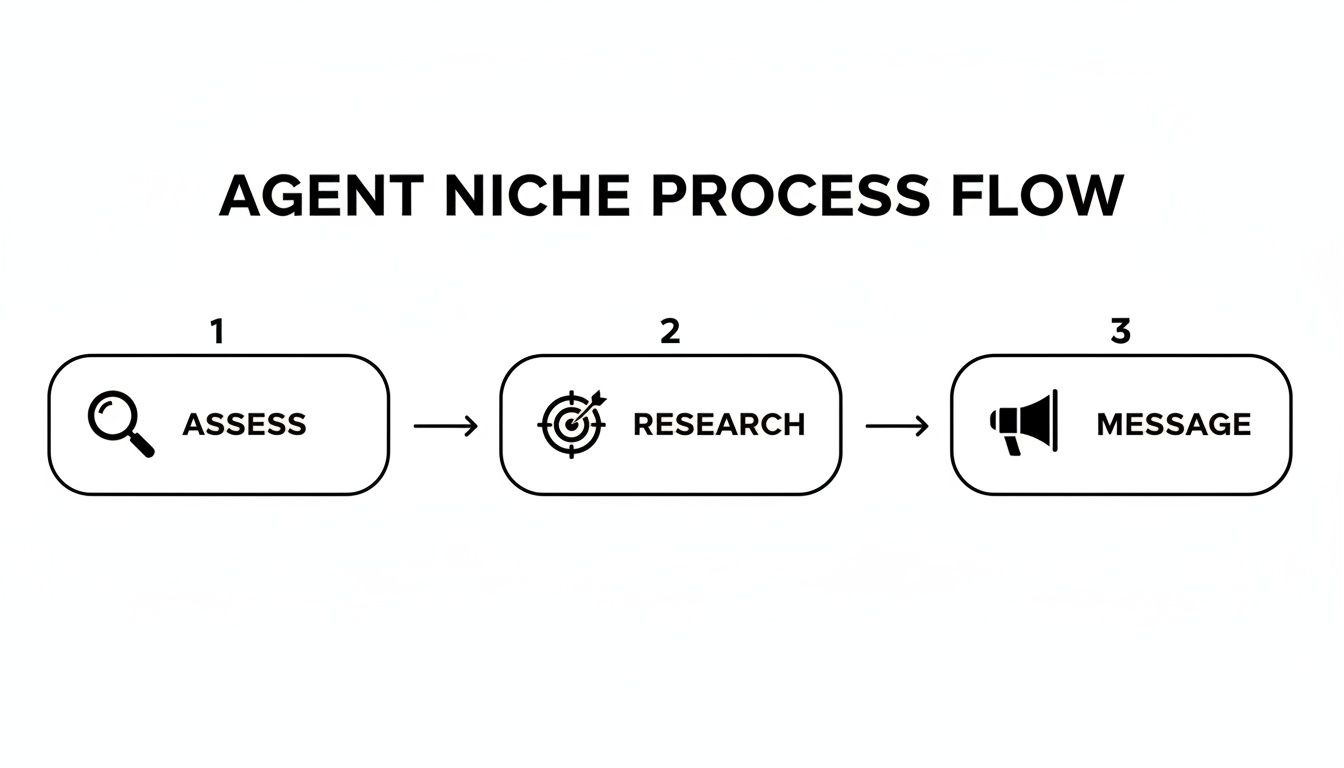
This graphic boils down the path to finding your specialty: figure out your strengths, research a market that needs you, and then craft a message that connects. Now, let’s talk about how to turn that brand promise into an experience they'll never forget.
Go Beyond the Standard Welcome Email
The first few days after a client signs on are your golden opportunity to set the tone. Most agents send a generic "welcome aboard" email and call it a day. You can do better. This is your chance to create a moment that immediately proves they made the right choice.
A thoughtfully put-together welcome package is your secret weapon here. It doesn't have to break the bank, but it absolutely has to be considerate. Think about what a new buyer or seller is really stressing about and give them solutions right out of the gate.
What to Include in a Client Welcome Package:
- A "What to Expect" Guide: A simple, well-designed timeline that maps out the entire process. Seeing the journey from listing to closing laid out visually demystifies everything and manages their expectations from day one.
- Your A-Team Roster: Give them a curated list of your go-to lenders, inspectors, and contractors. This saves them a ton of research and instantly positions you as a connected pro.
- A Small, Local Gift: A gift card from a neighborhood coffee shop or a tasty treat from a local bakery shows you’re plugged into the community and adds a genuinely personal touch.
This small gesture does more than just impress. It calms their nerves and builds a foundation of trust that will pay dividends throughout the entire transaction.
Master Proactive Communication
Want to know one of the biggest complaints clients have about real estate agents? Feeling like they’ve been left in the dark. The single easiest way to stand out is to never make your clients ask for an update.
You need a system for proactive, consistent communication. For sellers, maybe it's a "Tuesday Trends" email summarizing the week's market activity, showing feedback, and online traffic to their listing. For buyers, a quick text on Friday recapping the properties you saw and outlining the weekend's game plan can work wonders.
The goal is to answer their questions before they even think to ask them. When a client feels completely in the loop, they feel in control. That feeling turns a stressful process into a confident one.
This doesn't mean you have to be chained to your phone 24/7. A good CRM can help you automate some of these check-ins, freeing you up for the personal calls and texts that really matter.
The Art of the Closing Gift
The closing gift is your final impression. It's your last chance to leave them with something truly memorable. So please, forget the generic bottle of wine or the branded cutting board. A great gift is personal, thoughtful, and says something about your client or their new home.
Think back on your conversations. What little details did you pick up on?
- Did they rave about their love for gardening? A gift certificate to a local nursery with a set of quality gardening tools would be perfect.
- Did they talk nonstop about finally having a fireplace? A beautiful set of fireplace tools or a custom screen is incredibly thoughtful.
- Are they moving from out of town? Put together a "neighborhood welcome basket" with gift cards to the best local restaurants and shops to help them feel at home.
The gift itself is less important than the thought behind it. It’s the final signal that you were listening and that you cared about more than just the commission. That's how you plant the seeds for a steady stream of future referrals.
7. Work Smarter, Not Harder, With the Right Tech
To get ahead in this business, you have to be more than just a great salesperson—you have to be efficient. Technology is what makes that possible. It's your secret weapon for automating the tedious stuff, personalizing your client follow-up, and making smart, data-backed decisions that put you miles ahead of the competition.
The idea isn’t to sign up for every new tool that comes along. It's about building a simple but powerful tech stack that handles the busywork, freeing you up to do what you do best: build relationships and close deals.
The right tools aren't just a time-saver; they're a money-maker. There’s a direct line between smart tech adoption and agent success. Agents who really master their CRM, digital ads, and analytics consistently report higher GCI. It's no coincidence that one top brokerage attributed part of its $231.04 billion in sales volume to its strategic use of technology. You can see how the top players stack up in the latest RealTrends brokerage rankings.
Your CRM Is the Brains of Your Business
If you don't have a Customer Relationship Management (CRM) system, get one. Yesterday. A CRM is the central nervous system of your entire business. It takes that messy spreadsheet of contacts and turns it into an organized, automated machine for nurturing leads.
A good CRM does so much more than store phone numbers. It tracks every single interaction, pings you when it's time to follow up, and lets you deliver that personal, high-touch experience to everyone in your pipeline, all at once.
Think about it: a new lead comes in from Zillow. Instead of just another email notification, that person is automatically dropped into your CRM and put on a follow-up plan specifically designed for online buyer leads. That's how you make sure no one ever falls through the cracks. It's how you provide boutique-level service with the efficiency of a massive team.
If you’re shopping around, our guide to the best real estate marketing tools breaks down some of the top CRM options out there.
Find Your People With Targeted Ads
The days of blanketing a zip code with newspaper ads and hoping for a bite are long gone. Digital ad platforms like Facebook, Instagram, and Google let you get surgically precise, placing your message right in front of the people you actually want to work with.
This is about more than just "boosting" a post. You can run highly specific campaigns to reach people based on their real-life behaviors and interests.
- Facebook & Instagram Ads: Let you target users who have been looking at real estate sites, fit a certain income profile, or live in a specific neighborhood. Better yet, you can run lead-gen ads that let people give you their info without ever leaving the app. Frictionless.
- Google Ads: This is where you capture people who are actively looking for help right now. You can bid on keywords like "homes for sale in Green Hills" or "top realtor in my city" to show up at the exact moment they need you.
The real magic happens when you connect these ads directly to your CRM. A new lead from Facebook can instantly trigger a welcome text and an email drip campaign, making your response time immediate and seriously impressive.
Your marketing budget isn't just an expense; it's an investment. When you use targeted ads and track the return, you stop guessing and start making decisions that actually grow your business.
Stop Guessing and Start Using Data
Your gut instinct is valuable, but it’s no match for cold, hard data. A few simple analytics tools can completely change the way you price listings, advise your clients, and spend your marketing dollars. You don't need to be a data scientist to do this, you just need to know what to look for.
A few key data points to start tracking:
- Modern CMA Tools: The best CMA software pulls real-time MLS data, helping you price a home with incredible accuracy. This is how you build unshakable trust with your sellers.
- Website and Social Analytics: Take a peek at what's working. See which blog posts get the most reads or which Instagram Reels get the most saves. This is your audience telling you exactly what they want to see more of.
- Ad Campaign Metrics: Always track your Cost Per Lead (CPL) and Conversion Rate. If one ad is bringing you leads for $5 and another costs you $50 a pop, you know exactly where to put your money next month.
When you embrace even a few of these technologies, you start building a smarter, more scalable real estate business. This is how you free yourself from the grind to focus on what technology can never replace: building genuine, lasting relationships with your clients.
A Few Common Questions About Standing Out
Jumping into niche marketing and building a real brand can feel like a pretty big leap. It's totally natural to have questions about the time, money, and sheer effort it takes to see any real results. Let's dig into some of the most common things agents ask when they're trying to figure out how to stop blending in.
How Long Does This Really Take?
This is the big one, right? The honest, no-fluff answer is: it’s a marathon, not a sprint. Becoming known as the go-to expert for a specific group of people just doesn't happen overnight. It’s way healthier to think about your progress in phases instead of expecting a sudden flood of new clients.
Here’s what a realistic timeline usually looks like:
- Months 1-3: The Foundational Work. This is all about setup. You're nailing down your niche, sharpening your message, and updating your website with content that actually speaks to your target audience. You're planting seeds here.
- Months 4-9: Gaining Some Traction. Your consistent work starts to bubble to the surface. People in your niche begin to recognize your name. You might get your first few organic leads from a blog post or social media, and your referral partners finally get who they should be sending your way.
- Months 10-18+: Becoming the Authority. At this point, your brand has real momentum. You’re consistently putting out valuable content, your SEO is starting to kick in, and you're getting inbound calls from ideal clients who say things like, "I was told you're the person to talk to about historic homes."
The real key is consistency over intensity. One great neighborhood guide per month is so much more powerful than trying to do everything at once, burning out, and then quitting after a few weeks.
What Are the Best Budget-Friendly Ways to Get Noticed Online?
Standing out doesn't have to mean emptying your bank account. In fact, many of the highest-impact moves are either low-cost or completely free—they just trade cash for your time and strategic thinking. You can make a serious dent without a massive ad budget.
Here are a few of my favorite high-impact, low-cost strategies:
- Create Hyper-Local Content: Start a blog or a simple video series that’s laser-focused on your specific community or niche. Answer the questions people are actually typing into Google. Think of titles like, "What Are the Property Taxes in the Northwood Neighborhood?" or "The Real Pros and Cons of Living in the Jefferson School District." This costs you nothing but your own expertise.
- Max Out Your Google Business Profile: This is, without a doubt, the most powerful free marketing tool for any real estate agent. Completely fill out your profile with great photos, define your service areas, and post regular updates. More importantly, ask every single happy client for a review. Those positive reviews are a massive trust signal.
- Be the Community Connector on Social Media: Instead of just posting your listings, use platforms like Instagram or Facebook to become a local guide. Interview the owner of the new coffee shop, create a guide to the best parks for toddlers, or share details about the upcoming farmers market. This positions you as a connected resource, not just another salesperson.
How Can I Possibly Compete with the Mega-Teams in My Market?
It’s easy to feel intimidated when you see big teams with huge marketing budgets and an army of agents. But here's the secret: as a solo agent or a small team, your size is actually your greatest advantage. You can't outspend them, so you have to out-personalize and out-maneuver them.
Your competitive edge is all about agility and the personal touch you can provide. Large teams often rely on standardized, one-size-fits-all processes. You, on the other hand, can offer a truly custom, high-touch experience from start to finish.
Playing to Your Strengths
| Your Advantage | How to Use It |
|---|---|
| Personal Connection | The client works directly with you—the expert—not a junior agent or a faceless transaction coordinator. Make sure you shout this from the rooftops in your marketing. |
| Flexibility | You can pivot on a dime. If a great marketing idea hits you on a Tuesday, you can roll it out on Wednesday without needing three meetings and a committee vote. |
| Deep Niche Expertise | While the big teams have to be generalists, you can become the undisputed authority on a very specific thing, like mid-century modern homes or clients downsizing from the suburbs. For that audience, you become the only logical choice. |
At the end of the day, clients hire people, not faceless companies. Lean into what makes you unique. Your personal story, your deep community roots, and your direct involvement in every step of the process are powerful differentiators that a mega-team simply can't replicate.
Creating marketing that truly grabs attention is a huge piece of this puzzle, but it doesn't have to be complicated or expensive. AgentPulse helps you turn your listing photos into stunning, professional videos in just a few minutes. You can elevate your online presence, seriously impress your clients, and get more eyes on your properties—no video editor required. Learn more and try AgentPulse today.